Outsourcing usually suits employers without a transport team, while in-house service suits stable routes backed by existing fleet resources. The in-house vs outsourced employee shuttle decision depends on annual cost, reliable coverage, staffing, and operational control. You should compare equivalent routes before committing to either model.
For employers in Washington, DC, Maryland, and Northern Virginia, commute patterns add another factor. Metro connections, hospital shifts, and business parks require different schedules. A sound in-house vs outsourced employee shuttle review starts with actual ridership rather than assumptions.
In-House vs Outsourced Employee Shuttle Models
In-house operators manage the vehicles and staff. Outsourced operators deliver contracted transportation while employers oversee performance. Both arrangements can support daily employee transportation. Their responsibilities, capital commitments, and response procedures differ.
In-House Fleet Ownership and Staff Control
Your company buys or leases vehicles, employs drivers, and assigns dispatch responsibilities. Your fleet manager schedules preventive maintenance, tracks inspections, and arranges replacement coverage. A fully internal employee shuttle program also requires parking, insurance administration, and driver supervision.
In-house vs outsourced employee shuttle planning favors ownership when your facilities already support commercial vehicles. An existing maintenance team can spread resources across 2 or more routes. Without existing resources, an employer must build operations before the first pickup.
Managed Shuttle Contracts and Employer Oversight
An outsourced employee shuttle provider supplies transportation under agreed routes, operating hours, and service terms. Your human resources team defines demand and reviews performance. The provider coordinates assigned drivers, vehicle availability, dispatch, and maintenance under its contract.
Outsourcing does not remove employer oversight. You still approve pickup locations, explain service changes, and examine missed trips. A useful in-house vs outsourced employee shuttle assessment assigns a named owner to every operational task.
In-House vs Outsourced Employee Shuttle Costs
Compare the full annual operating cost, not vehicle payments against a vendor invoice. A fair in-house vs outsourced employee shuttle budget covers the same route hours, riders, service days, and backup standard.
Complete In-House Operating Expenses
An owned fleet demands vehicle purchase or lease payments, driver wages, payroll costs, fuel, and commercial insurance. Include maintenance, tires, cleaning, storage, dispatch software, and recruiting. Add paid leave, substitute drivers, unexpected repairs, and management time.
Calculate in-house vs outsourced employee shuttle expenses over 12 months. Annual accounting avoids misleading comparisons between upfront equipment purchases and recurring monthly contracts. Vehicle depreciation and loan payments require separate treatment to avoid double counting.
Outsourced Contract Expenses and AZA Published Rates
Contract costs depend on vehicle size, route distance, daily service hours, pickup frequency, and coverage commitments. Request separate lines for overtime, waiting, extra stops, holidays, and emergency replacements. Ask whether the provider charges for cancelled service days.
AZA Transportation publishes a $150 hourly base rate for its Mercedes Sprinter, with a 4-hour minimum. AZA also lists a $180 hourly base rate for its GM40 Black Bus, with a 4-hour minimum. Those figures describe published vehicle booking rates, not a monthly employee shuttle contract quote.
AZA states that mileage, standard transportation charges, parking, and other surcharges can change the final total. Review AZA's published rates before you request a recurring quote. Use written service specifications rather than multiplying a public hourly figure into a promised contract price.
The Cost-per-Ride Test
Cost per completed passenger trip equals total program cost divided by completed passenger trips. Count each one-way employee journey separately. Record actual completed rides rather than registered employees or empty seats.
For example, 20 employees riding twice daily over 22 workdays produce 880 passenger trips. Divide each model's comparable monthly cost by 880. Repeat the in-house vs outsourced employee shuttle calculation after subtracting cancelled runs and accounting for substitutes.
Reliability and Daily Operational Control
Reliable shifts require dependable vehicles, approved routes, and a clear response when disruptions occur. In-house vs outsourced employee shuttle performance should use the same arrival targets and incident definitions.
Consistent Shift Arrivals
Hospitals, warehouses, and offices create different arrival windows. A hospital with a 7:00 a.m. handoff needs tighter arrival planning than an office with flexible starts. Build 1 timetable per shift pattern, then test traffic conditions.
When comparing in-house vs outsourced employee shuttle services, distinguish control from speed. Internal dispatchers can approve route changes directly. Contract operators can respond quickly when the agreement defines a clear escalation process.
Driver and Vehicle Contingency
A driver absence should trigger a named replacement process before the first scheduled departure. An unexpected breakdown needs a substitute vehicle, updated arrival time, and rider notification. Employers should confirm backup capacity instead of assuming guaranteed replacements.
In-house teams must fund standby drivers or approved subcontractors. Outsourced providers must document dispatch coverage and backup arrangements. Ask each candidate who calls employees, who assigns replacements, and who records missed pickups.
A balanced in-house vs outsourced employee shuttle scorecard tracks completed runs and recovery time. Missed departures often affect payroll coverage, hospital staffing, and warehouse operations more than cosmetic vehicle features.
Safety, Insurance, and Compliance Responsibilities
Both models need qualified drivers, safe vehicles, documented procedures, and clear accountability. Operating responsibility differs from an employer's duty to vet a service provider. Your legal and risk teams should check the applicable rules for each route.
Driver Credentials and Vehicle Maintenance
The Federal Motor Carrier Safety Administration (FMCSA) sets requirements for covered passenger operations. Vehicles designed for 16 or more occupants, including the driver, generally require a commercial driver's license (CDL). Drivers also need a passenger endorsement.
The FMCSA also lists a $5 million minimum liability requirement for covered interstate for-hire carriers using that seating category. Private fleet arrangements, commuter exceptions, and state rules require separate review. Never treat one federal figure as universal coverage guidance.
For either in-house vs outsourced employee shuttle model, request inspection records, driver qualification procedures, and incident contacts. Identify responsibility for maintenance, insurance certificates, and claims handling. Keep signed documentation accessible to your facilities and procurement teams.
Accessibility and Employee Data
Plan accessibility before selecting a vehicle. Ask about accessible boarding, seating, service arrangements, and applicable Americans with Disabilities Act (ADA) requirements. Confirm any lift or ramp specifications directly with the operator instead of assuming every vehicle supports every rider.
An in-house vs outsourced employee shuttle contract should define data ownership, reporting access, and incident notifications. Your employer remains responsible for internal privacy decisions even when a contractor runs daily service.
Employee Shuttle Routes Across the DMV
Washington, DC, Maryland, and Northern Virginia routes need local transit and traffic planning. The DMV region includes Metro connections, suburban employment centers, and dispersed job sites. Test each route against employee home clusters and shift timing.
Metro Station and Last-Mile Connections
A shuttle linking a Metro station to a business park can close a difficult final commute segment. A 2-mile (3.2-km) connection might justify scheduled pickups when walking access or local transit service remains limited. Verify road distance before making route promises.
AZA's corporate shuttle service options address coordinated trips between offices, campuses, and business sites. Employers in Arlington, Tysons, and Rockville can compare consistent loops against individual driving or parking reimbursements.
Review in-house vs outsourced employee shuttle routes during morning and evening peaks. A route with 3 high-demand stops often performs better than a circuit with 9 lightly used stops. Validate stop selection through a voluntary employee survey.
Vehicle Capacity Matched to Riders
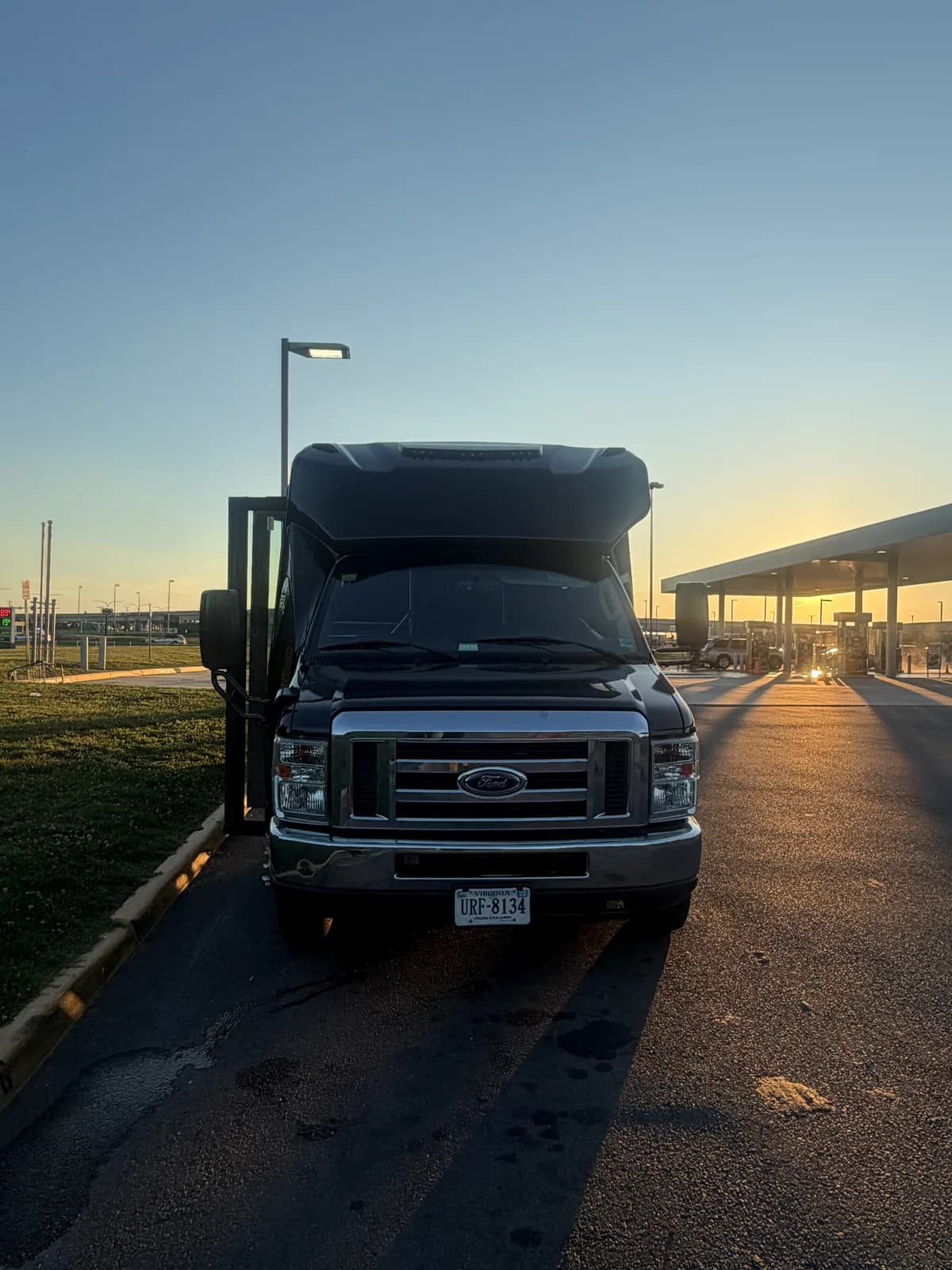
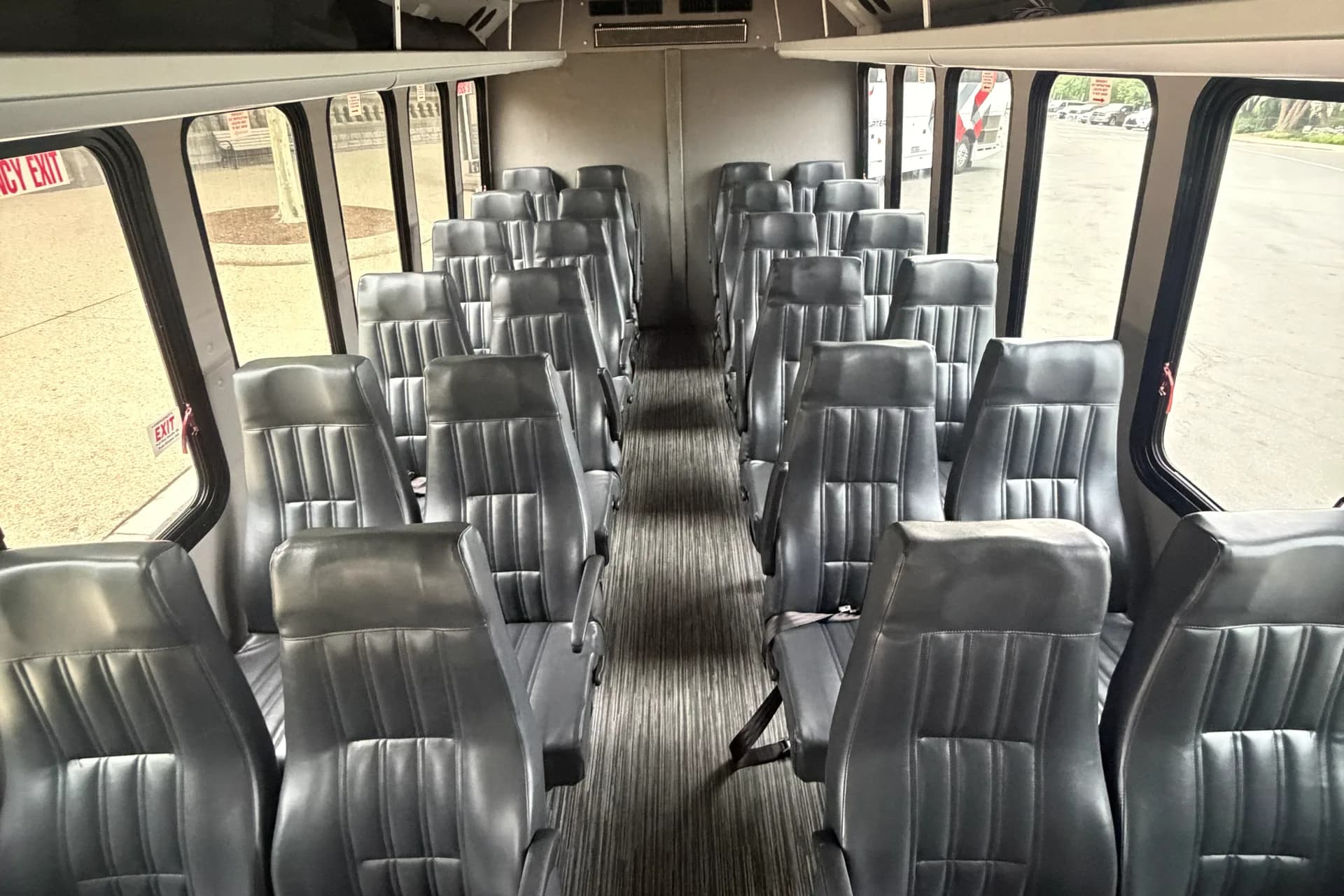
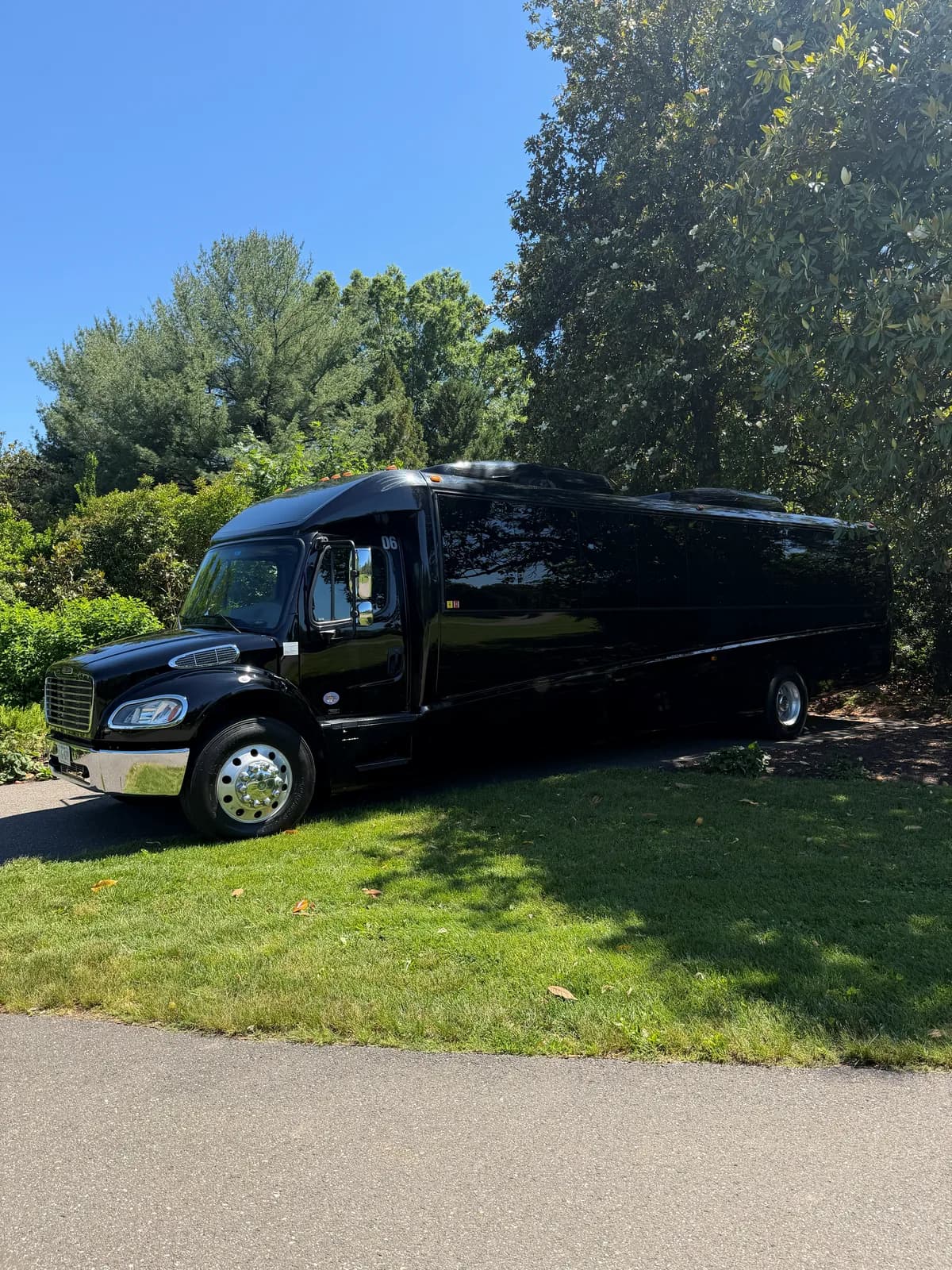
Seat counts should reflect measured demand, expected attendance, and accessible seating requirements. AZA lists a 15-passenger Mercedes Sprinter, a 40-passenger GM40 Black Bus, and a 56-passenger Van Hool Motorcoach. Confirm the assigned vehicle and final seating layout before scheduling.
The in-house vs outsourced employee shuttle choice affects fleet flexibility. An owner must purchase, lease, or borrow another vehicle when ridership outgrows capacity. A contractor can propose another class, subject to availability and contract terms.
Business Fit Across 3 Operating Models
Choose among in-house, outsourced, and hybrid operations based on fleet readiness and changing demand. No model wins every service scenario. Use the same operational standards when testing each arrangement.
Year-Round In-House Operations
In-house operations make sense for predictable routes with consistent weekday demand. Large campuses and established manufacturers sometimes already employ drivers and maintain vehicles. Existing dispatch, parking, and insurance relationships reduce the cost of adding a route.
Strong in-house vs outsourced employee shuttle candidates have stable staffing, dependable facilities, and skilled fleet supervisors. Ask whether your business expects the same route after 3 years. Include the financial risk of an underused vehicle if employee attendance falls.
Flexible Outsourced Operations
Outsourcing suits new programs, temporary construction projects, seasonal staffing, and split shifts. A managed shuttle contract can start without vehicle ownership. Contract flexibility still depends on notice periods, minimum hours, and available fleet capacity.
AZA's scheduled shuttle transportation service includes short-term and ongoing programs with planned loops. Your in-house vs outsourced employee shuttle evaluation should confirm exact weekday coverage, stop changes, and disruption support before signing.
Shared Responsibilities in Hybrid Operations
A hybrid model keeps selected routes under internal management while outsourcing overflow or specialist coverage. For example, your employer can operate a regular morning loop and contract late-night shifts. Assign one coordinator across both arrangements.
A hybrid in-house vs outsourced employee shuttle plan works best when both teams use common rider counts and punctuality definitions. Split ownership without shared reporting creates avoidable service gaps.
How to Build a Fair Shuttle Cost Comparison
To build a fair shuttle cost comparison, measure identical service requirements across 12 months. A purchasing decision needs matching route specifications, operating days, passenger counts, and backup obligations.
Set a Common 12-Month Baseline
Write down 5 inputs: route endpoints, daily runs, service days, rider counts, and vehicle capacity. Add scheduled waiting time and accessible transportation needs. Share one identical scope with your internal fleet manager and every bidder.
For in-house vs outsourced employee shuttle budgets, separate committed costs from activity-based costs. Internal costs include payroll and vehicle expenses during low-ridership weeks. Outsourced costs follow the contract's minimum hours and cancellation rules.
Calculate Cost per Completed Ride
To calculate cost per completed ride, divide each model's fully loaded cost by completed one-way passenger journeys. Include substitute vehicles, dispatch labor, and documented additional fees. Present cost per completed trip alongside the percentage of runs completed on schedule.
A sample route carrying 15 employees twice per day over 20 days records 600 passenger trips. Your accounting team can insert actual invoice amounts without inventing local market rates. Track capacity use separately from passenger-trip cost.
In-house vs outsourced employee shuttle economics also depend on lost service. Record the financial impact of missed shifts, extra rideshare coverage, and unexpected overtime where your business can verify those costs.
How to Launch a 30-Day Shuttle Pilot
To launch a 30-day shuttle pilot, agree on the route, escalation contacts, and performance targets before service starts. A limited test exposes timetable problems without committing your business to an unproven annual schedule.
Set Service Terms Before Day 1
Specify 4 items in the trial agreement: pickup locations, scheduled arrivals, backup response, and billing changes. Name one employer contact and one operator contact. Define how employees report missed pickups and receive revised arrival times.
Request the proposed vehicle class, driver documentation process, and accessibility arrangements. Record service exceptions such as holiday schedules and unscheduled overtime. Your in-house vs outsourced employee shuttle evaluation needs comparable written commitments.
Review 6 Performance Metrics
Track 6 metrics: on-time arrivals, completed runs, average riders, seat occupancy, complaints, and cost per completed ride. Record performance daily and review results weekly. Your dashboard should separate traffic delays from provider-side disruptions.
A 30-day in-house vs outsourced employee shuttle pilot also reveals staffing load. Count hours your team spends on scheduling, incident calls, contract administration, and reporting. Include administrative labor in the final cost assessment.
Decision Checklist for Employers
A reliable decision requires verified costs, clear task ownership, and measurable service targets. Use the quick-reference table to assign work before you approve a shuttle model. Timing estimates describe planning tasks, not guaranteed provider lead times.
Quick-Reference Tasks and Timing
| Task | Timing | Method | Difficulty |
|---|---|---|---|
| Map rider demand | Days 1-3 | Survey shifts and ZIP codes | Low |
| Define common routes | Days 4-6 | Plot stops and traffic windows | Medium |
| Check fleet readiness | Days 7-9 | Review drivers, insurance, vehicles | High |
| Request comparable quotes | Days 10-14 | Send one service scope | Medium |
| Test operational coverage | Days 15-30 | Run pilot and record results | High |
Use the table during your in-house vs outsourced employee shuttle planning meeting. Assign procurement to quote checks and facilities to route validation. Ask human resources to manage employee communication and voluntary ridership feedback.
Final Selection Signals
Choose internal operations when your employer already has fleet expertise, stable annual demand, and spare capacity. Choose managed service when staffing fluctuates or your team lacks transportation infrastructure. Choose hybrid coverage when a core fleet handles steady routes but peak shifts require additional vehicles.
Evaluate the in-house vs outsourced employee shuttle result against total annual cost, on-time service, and management workload. Reject quotes with unclear replacement coverage or unpriced overtime. Record a 90-day review date after launch.
Frequently Asked Questions
Is outsourcing always cheaper than an in-house employee shuttle?
No. An established fleet can operate a stable route at lower marginal cost. Compare full annual costs and reliable completed trips. The in-house vs outsourced employee shuttle answer changes with utilization and backup requirements.
Can an employer control routes after outsourcing?
Yes. Your employer can define stops, shift times, reporting, and change procedures in the contract. Operational dispatch remains with the provider under the agreed responsibilities.
Do all in-house shuttle drivers need a commercial driver's license?
No. License requirements depend on vehicle ratings, seating capacity, operating type, and applicable rules. Covered vehicles designed for 16 or more occupants, including the driver, generally require a CDL.
Does AZA publish a fixed monthly employee shuttle price?
No. AZA publishes vehicle-specific hourly base rates, not a universal monthly employee shuttle contract price. Request a route-specific quote that addresses scheduling, minimum hours, and additional charges.
Can an employer outsource only overnight or peak-shift routes?
Yes. A hybrid program can contract selected shifts while keeping other routes internal. Confirm contractor availability, minimum hours, and emergency procedures before committing.
Choosing Your Shuttle Model in 2026
The best arrangement delivers reliable employee arrivals at a defensible full-year cost. In-house vs outsourced employee shuttle decisions favor existing fleet teams on stable routes and experienced operators on variable routes. Compare actual rider demand, safety documents, service terms, and pilot results before deciding. For Washington, DC, Maryland, or Northern Virginia routes, call (571) 725-8544 or review employee shuttle service plans with AZA Transportation. Request a written proposal for your workforce.
About the author:
Amar-Awan