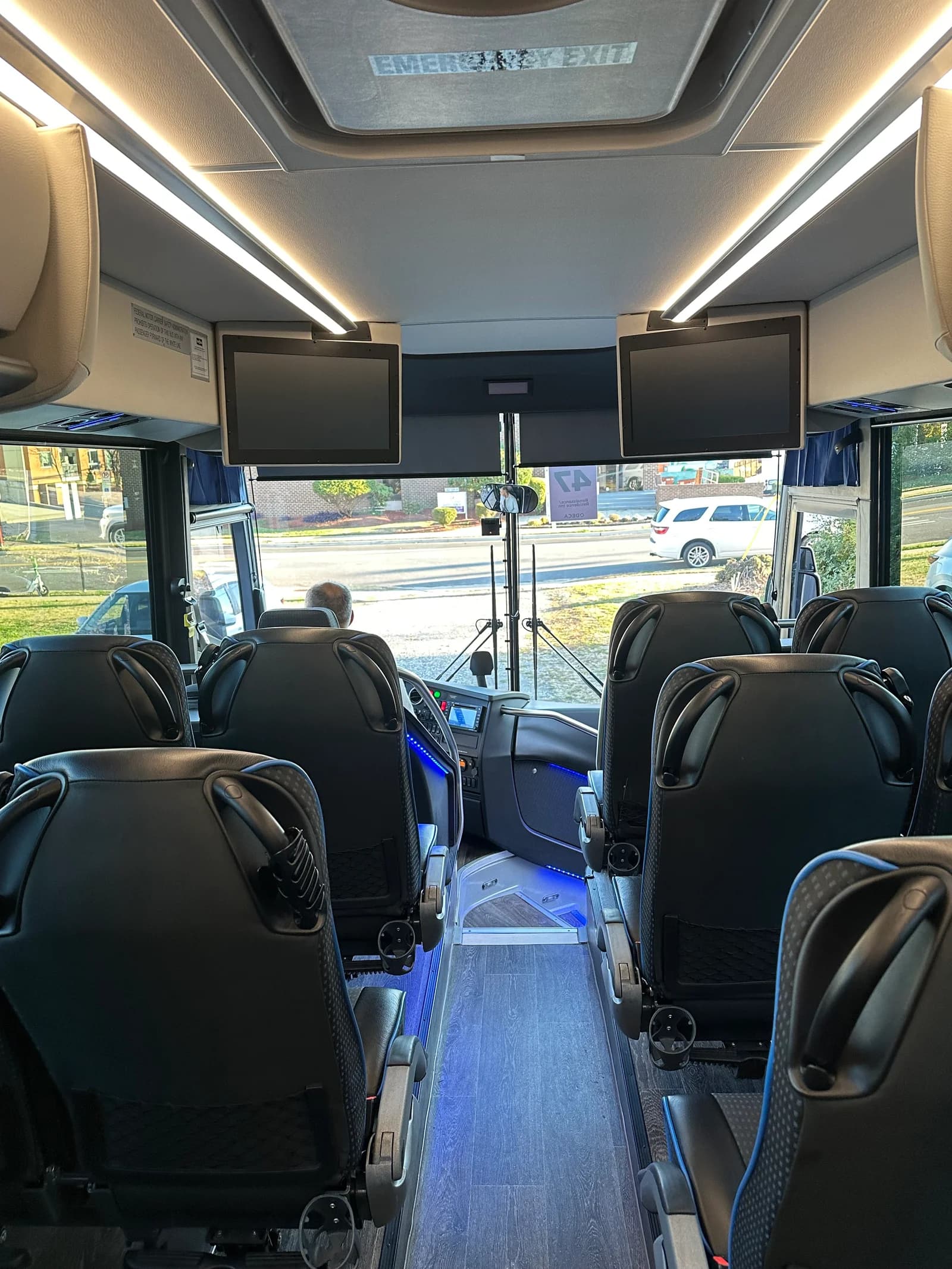

Your employee shuttle contract checklist should cover routes, safety, insurance, service standards, pricing, accessibility, passenger data, and exit rights. Define each obligation, assign an owner, and record the evidence before you sign.
Recurring workforce transportation needs more than a vehicle reservation. Your agreement must connect daily dispatch decisions with your operating budget and employee arrival requirements. Use the employee shuttle contract checklist below to compare proposals and prepare your final agreement.
AZA Transportation serves employers across Washington, DC, Maryland, and Virginia. You can use the same procurement framework across the United States, while checking local operating requirements separately.
Employee Shuttle Contract Checklist Before Vendor Selection
Start with a written service specification that every bidder prices against. Your employee shuttle contract checklist should describe the transportation you need before you compare vendors.
Prepare a request for proposal (RFP) when you need competing offers against identical requirements. Invite 3 qualified providers and give each provider the same route attachment. Compare route coverage, backup capability, and billing assumptions before you rank total costs.
Service Scope and Route Attachments
List every pickup point, destination, departure time, and operating day. Include an address and a map pin for each stop. Identify your site entrance, security checkpoint, and approved loading area.
Define 3 service categories: commuter routes, parking loops, and office transfers. Review AZA Transportation's corporate shuttle service when your agreement includes recurring office connections. Confirm your exact route in the written proposal.
Record mileage in both units, such as 10 miles (16.1 kilometers) per scheduled trip. Attach a holiday calendar covering Thanksgiving, Christmas, and your planned shutdown dates. Add document dates so dispatch and procurement use matching route instructions.
Capacity and Shift Coverage
Match seating to your busiest departure, not your average daily attendance. Count riders separately for your morning, evening, and overnight shifts. Distinguish registered employees from expected daily passengers.
For a planning example, reserve 30 seats for 26 expected riders and review attendance weekly. Treat this example as a capacity assumption, not a commitment under an AZA vehicle contract. A Mini Party Bus seats up to 30, so confirm usable seating after wheelchair securement and equipment storage.
Add capacity approval to your employee shuttle contract checklist. Specify who authorizes another departure when reservations exceed seating. Prohibit dispatch from solving overcrowding through unauthorized standing passengers.
Carrier Credentials and Insurance Verification
Verify the operating carrier before you approve the transportation agreement. Your employee shuttle contract checklist should identify the legal operator and any transportation management company separately.
Ask your procurement lead to store dated verification evidence alongside the signed contract. Record the carrier's legal name exactly as the carrier appears on insurance documentation. Resolve name differences before you authorize the first service day.
Operating Authority and Driver Qualifications
Check registration, applicable authority, and driver credentials against your actual service model. Use the Federal Motor Carrier Safety Administration (FMCSA) passenger carrier search for interstate carrier checks. Search using the company name or United States Department of Transportation (USDOT) number.
Check state oversight requirements for service wholly within 1 state. Ask your legal reviewer to confirm which federal and state rules govern your route. Avoid applying another market's licensing checklist to your United States operation.
Request evidence of applicable driver licensing, passenger endorsements, and qualification checks. Require the operator to schedule lawful driving and rest periods. Your employee shuttle contract checklist should assign responsibility for credential renewals and expiration monitoring.
Insurance Evidence and Subcontractor Approval
Have your risk manager verify coverage scope, limits, exclusions, and policy dates. Request commercial automobile liability evidence and other coverage your risk review requires. Confirm the actual operating carrier's coverage with the insurer or broker.
Do not treat a certificate as proof of every contractual protection. Request an endorsement when your negotiated agreement requires additional insured status. Ask counsel to review indemnification alongside insurance obligations.
Require written approval before the provider substitutes another carrier. Apply your employee shuttle contract checklist to every approved subcontractor. Keep the original provider accountable for dispatch coordination and contractual reporting.
Employee Shuttle Contract Checklist for Service Standards
Use measurable commitments with clear evidence and defined remedies. A service level agreement (SLA) connects each promised outcome with a measurement method and review period.
The sample thresholds below illustrate negotiation choices, not legal requirements or AZA guarantees. Test each threshold against traffic, route length, and backup availability. Keep your employee shuttle contract checklist aligned with the final signed SLA.
On-Time Performance and Trip Completion
Define punctuality through a departure window and a separate workplace arrival deadline. Prohibit early departures that strand employees at approved stops. Set the proposed departure window from the scheduled departure through 5 minutes after.
For an illustrative monthly target, require 98% of eligible departures within the agreed window. Calculate punctuality as qualifying departures divided by eligible scheduled departures, multiplied by 100. Handle cancellations separately so missing trips never disappear from reporting.
Track arrival performance against your shift start buffer. Use Global Positioning System (GPS) timestamps and gate arrival logs as evidence. Your employee shuttle contract checklist should name the person who approves disputed timestamp corrections.
Backup Dispatch and Incident Communication
Name the backup dispatcher and specify when each response clock starts. Separate acknowledgment time, replacement assignment time, and replacement arrival time. Require dispatch to record the breakdown notification timestamp.
Propose a 5 minute acknowledgment target and negotiate replacement arrival against actual staging distance. Ask the provider to demonstrate backup coverage during your overnight shift. Define replacement accessibility and seating before service begins.
Specify who pays for approved recovery transportation after a missed trip. Include delay alerts via text, email, and your employee portal. Add an escalation contact to your employee shuttle contract checklist for unresolved service failures.
Accessible Vehicles and Safe Pickup Locations
Write accessibility and boarding requirements into your vehicle specification. Assign your accessibility lead to review the applicable Americans with Disabilities Act (ADA) obligations with counsel. Confirm the service design before selecting vehicle equipment.
Request the correct boarding equipment, wheelchair securement, and driver training for your program. Plan an accessible replacement vehicle for equipment failures. Document the accommodation request channel without collecting unnecessary medical information.
Include boarding time in your route test. Check pickup lighting, pedestrian crossings, and loading permission during the actual operating period. Record vehicle clearance in both units, such as 12 feet (3.66 meters), when your site requires clearance checks.
Use AZA's shuttle transportation service page to discuss recurring pickup arrangements and passenger demand. Confirm vehicle suitability directly before you include a vehicle in your agreement.
Your employee shuttle contract checklist should assign responsibility for each stop inspection. Recheck the loading location after roadworks or a site entrance change. Keep photographs and written access approval with your route attachment.
Contract Pricing and Invoice Controls
Compare written recurring service quotes against the same operating calendar. Your employee shuttle contract checklist should explain the billing unit before you compare total prices.
Request a dedicated shuttle service quote for your route and schedule. Do not substitute a one time charter rate for a recurring employee transportation contract. Review AZA Transportation's published rates and confirm your recurring service price for the requested scope.
Included Charges and Price Adjustments
Separate the base service from conditional charges before you approve a budget. Request explicit treatment of fuel, tolls, parking, overtime, and holiday operation. Define depot travel, also called deadhead mileage, within the quoted scope.
Require the provider to state whether minimum hours apply per vehicle or per service day. Record the cost basis for an additional departure without inventing a market rate. Compare 3 proposals using identical operating days and mileage assumptions.
For fuel surcharge clauses, name the index, baseline, adjustment interval, and approval process. Specify downward adjustments as well as upward adjustments. Add price revision notice and supporting evidence to your employee shuttle contract checklist.
Invoice Evidence and Dispute Handling
Tie every billed service to an approved trip or authorized change. Require trip identifiers, service dates, vehicle assignments, and supporting dispatch records. Match the invoice against your approved calendar before payment.
Negotiate a written invoice dispute period and payment deadline. For a sample workflow, review invoices within 10 business days and document discrepancies immediately. Treat the sample timeline as an internal planning choice.
Pay undisputed amounts under the agreed payment terms. Track disputed charges and approved service credits in separate accounting entries. Your employee shuttle contract checklist should identify your finance approver and the provider's billing contact.
Route Changes and Workforce Flexibility
Use written change control for headcount, stop locations, and shift times. Your employee shuttle contract checklist should distinguish routine adjustments from changes that alter pricing or capacity.
Create 3 change categories: passenger roster updates, timetable adjustments, and added routes. Name an employer approver for each category. Require dispatch acknowledgment before employees follow a revised timetable.
Negotiate notice periods against the operational effort each change requires. For example, propose 2 business days for roster updates and 10 business days for new route planning. Confirm actual lead times with the provider before signing.
Address hybrid attendance without assuming identical demand every weekday. Track Monday, Wednesday, and Friday ridership separately when attendance differs. Set a review trigger when your busiest trip reaches the agreed seating threshold.
Add temporary suspensions for planned shutdowns and office closures. Define weather decisions, notification deadlines, and cancellation charges through written terms. Keep your employee shuttle contract checklist attached to the latest approved service calendar.
Passenger Data and Reporting Ownership
Collect only the rider information your transportation program needs. Your employee shuttle contract checklist should define data access, retention, security responsibilities, and deletion after contract termination.
Use employee identifiers and approved pickup points where home addresses add no operational value. Limit administrator access to named roles, such as your transport coordinator and billing reviewer. Require the provider to identify technology vendors that process passenger information.
Specify reporting ownership before your provider launches a tracking application. Require exports for trip timestamps, boardings, complaints, and service credits. Define boardings as passenger trips so finance never confuses boardings with unique employees.
Measure seat occupancy as boardings divided by available seats for the same trip. Compare matched departures rather than unrelated weekly totals. Require your provider to explain GPS outages and missing boarding entries.
Set a contractual notification deadline for security incidents involving passenger information. Ask counsel to align incident handling with applicable privacy requirements. Include data return, deletion confirmation, and administrator access removal in your employee shuttle contract checklist.
Launch Tasks and Approval Timing
Approve the route, documents, and recovery plan before your first passenger trip. Use the following employee shuttle contract checklist timetable as a suggested procurement schedule. Adjust timing when your route requires additional approvals.
| Task | Timing | Method | Difficulty |
|---|---|---|---|
| Confirm route scope | 30 days before launch | Review map and shift calendar | Moderate |
| Verify carrier evidence | 21 days before launch | Check registration and insurance | High |
| Agree service standards | 14 days before launch | Sign metrics and remedies | High |
| Test route and boarding | 7 days before launch | Run actual shift timetable | Moderate |
| Brief employees | 3 days before launch | Send stops and support contacts | Low |
| Review launch performance | 7 days after launch | Reconcile GPS and dispatch logs | Moderate |
Run the trial route during your actual commute window. Check gate queues, turnaround space, and boarding time rather than relying only on mapping estimates. Record the provider's corrective action for each failed test.
Give employees their approved stop, departure time, and dispatch contact before launch. Explain missed pickup procedures and late departure alerts. Your employee shuttle contract checklist should name the manager who approves launch readiness.
Confirm that your procurement, finance, and operations leads hold the same signed agreement. Resolve conflicting attachments before service starts. Record document priority so the service specification governs any inconsistent proposal wording.
Renewal and Exit Protection
Negotiate renewal, termination, and transition support before committing to recurring service. Your employee shuttle contract checklist should cover both routine expiration and serious performance failures.
Record the initial contract term and any automatic renewal deadline. Set a calendar reminder before your notice deadline. Compare actual ridership and total spending before approving another term.
Define a cure period for correctable service failures and separate rights for urgent safety concerns. Ask counsel to review termination rights, liability limits, and dispute resolution. Keep payment disputes separate from immediate passenger recovery decisions.
Require a transition package containing your route map, timetable, stop permissions, and operational contacts. Set a deadline for returning passenger data and closing administrator access. Add final invoice reconciliation to your employee shuttle contract checklist before the agreement expires.
Employer Contract FAQs
Do you need a written employee shuttle agreement?
Yes. You need written scope, billing, safety responsibilities, and service remedies to manage recurring transportation consistently.
Does every shuttle follow identical federal requirements?
No. Your route, operating model, and vehicle determine applicable requirements. Check federal and state obligations with your legal reviewer.
Can you request approval rights over subcontractors?
Yes. Negotiate written approval and verification requirements before another carrier transports your employees.
Should your contract include backup transportation?
Yes. Specify response timing, replacement capacity, accessibility, and responsibility for approved recovery costs.
What belongs in your employee shuttle contract checklist?
Include scope, credentials, insurance, performance, accessibility, pricing, data, and exit rights. Assign an owner and evidence requirement to each category.
How often should you review shuttle performance?
Review monthly, with weekly checks during launch. Compare punctuality, completed trips, occupancy, complaints, and invoice accuracy against your agreed targets.
Can you confirm recurring shuttle prices from a general guide?
No. Request a written quote that matches your route, vehicle needs, service calendar, and contract term.
Final Contract Approval
Your employee shuttle contract checklist should connect every promise with an owner, a deadline, and verifiable evidence. Approve scope, safety checks, billing rules, recovery arrangements, and exit terms before your service begins. Call (571) 725-8544 or send AZA Transportation your route map, shift calendar, and expected headcount through the employee shuttle service page. Request a written proposal that matches your operating requirements and approval process.
About the author:
Amar-Awan