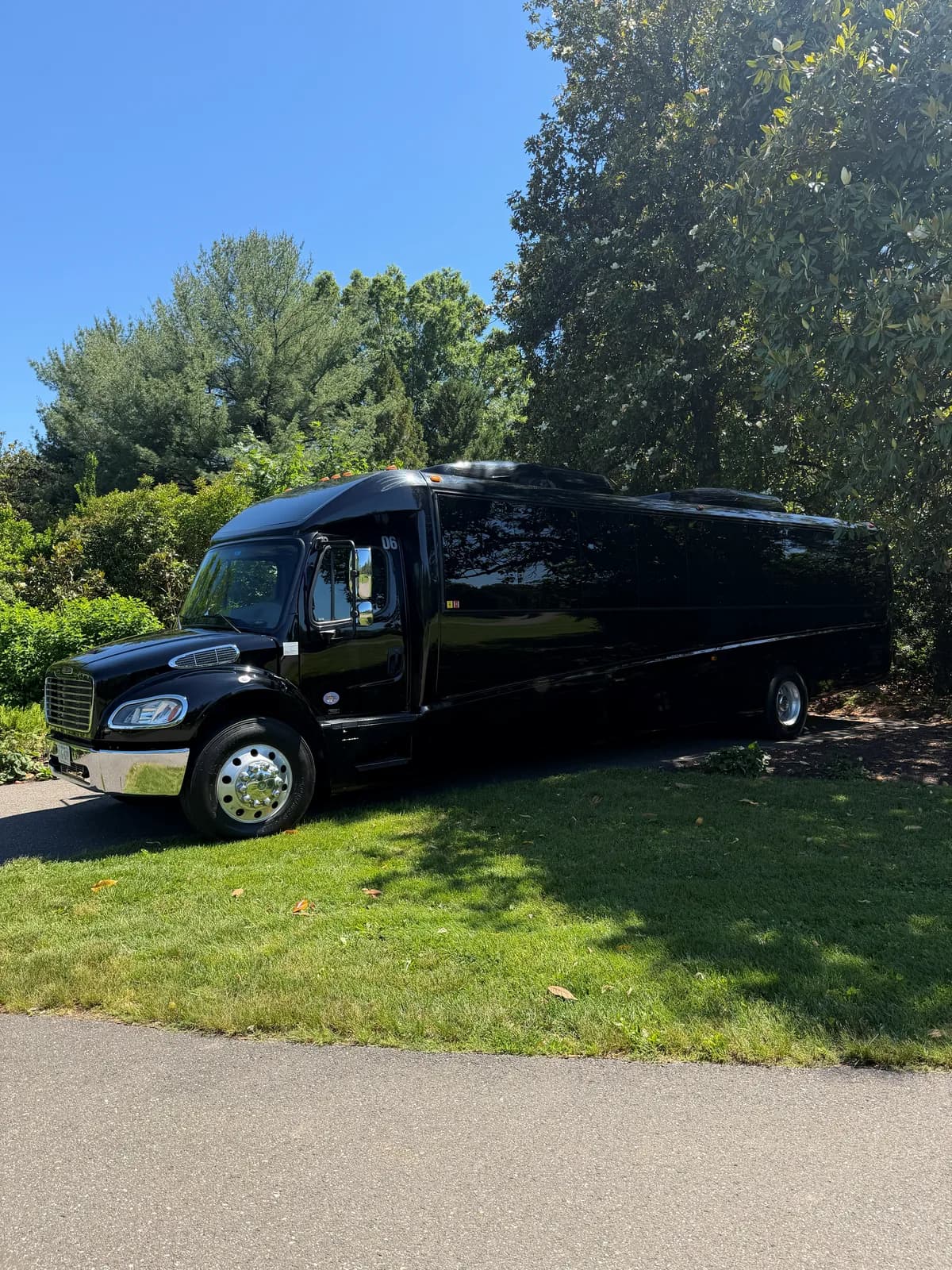

Choose a reliable employee shuttle provider by checking operator safety, route fit, backup coverage, and written performance commitments. Learning how to choose employee shuttle provider starts with evidence from 3 comparable proposals and a measured pilot.
For Washington, DC, you need a partner who understands cross-jurisdiction travel, shift changes, and legal boarding locations. Your evaluation should separate daily workforce transportation from executive transfers and occasional group travel.
Use the selection process below to compare actual operating commitments before you sign. Treat every numerical target as a proposed purchasing standard, unless your contract states otherwise.
How to Choose Employee Shuttle Provider With Clear Requirements
To choose an employee shuttle provider with clear requirements, give each bidder the same route brief and service calendar. Shared inputs help you compare service quality without confusing different operating assumptions.
Workforce Demand and Shift Coverage
Count expected riders by departure, weekday, and worksite for your commuter shuttle service. Ask employees in a short survey about practical pickup hubs, walking access, and required arrival times.
Record 3 commuting patterns: fixed office attendance, rotating shifts, and hybrid attendance. Separate confirmed riders from interested employees before you select vehicle capacity.
Define the latest acceptable workplace arrival and the earliest permitted departure. Include paid holidays, overtime shifts, and training days in your calendar.
Your brief establishes how to choose employee shuttle provider for the employee shuttle program you actually need. Avoid selecting capacity from total payroll headcount alone.
Washington DC Route and Loading Checks
Require a route walkthrough at your actual service time. Test station access, safe crossings, vehicle turning space, and permission from the property owner.
For a sample 10-mile (16.1-kilometer) route, measure actual travel time during your morning arrival window. Add boarding time and security screening before you propose a schedule.
Ask your bidder to document an alternate path for closures around your destination. Name the actual loading entrance instead of listing only the building address.
Keep charter bus rental separate from recurring employee commuting in your purchasing brief. Compare black car service for executive trips and airport transportation for flight transfers.
How to Choose Employee Shuttle Provider Through Safety Checks
To choose employee shuttle provider through safety checks, verify the operating company behind your assigned vehicle. A sales brand and an actual passenger carrier can represent different businesses.
Carrier Identity and Insurance Evidence
Request the carrier’s legal name and United States Department of Transportation (USDOT) number, where applicable. Confirm the operating company before you approve a subcontractor or replacement vehicle.
Use the Federal Motor Carrier Safety Administration (FMCSA) bus safety search to review interstate carrier information. Check operating authority, safety history, and insurance records through the official search process.
Ask the appropriate state agency about a carrier operating only within 1 state. Your route and vehicle determine the applicable oversight requirements.
A federal record provides evidence for how to choose employee shuttle provider, alongside insurance verification and operational review. Do not treat a missing safety rating as proof of either safety or unsafe operation.
Ask your risk manager to approve coverage limits, exclusions, and additional insured requirements. Obtain a current certificate of insurance and request insurer confirmation when your review requires verification.
Driver Qualifications and Maintenance Records
Request evidence of the license class and passenger endorsement your assigned vehicle requires. Review driver screening, relevant training, and applicable drug and alcohol testing procedures.
Ask how the operator schedules rest and covers absence without exceeding applicable working limits. Review 3 maintenance records: inspection history, defect reports, and completed repair records.
Your safety file explains how to choose employee shuttle provider without relying on advertising claims. Repeat document checks when the provider changes the operating carrier.
Fleet Capacity and Accessible Boarding
Choose capacity that matches your busiest departure and actual boarding needs. Inspect the vehicle configuration rather than accepting a general fleet photograph.
Seats and Daily Passenger Comfort
For an illustrative 24-rider departure, compare a 28-seat vehicle with a second scheduled departure. Confirm usable capacity after wheelchair accommodation, equipment storage, and your operating restrictions.
Inspect 4 features: climate control, seat condition, handholds, and interior lighting. Test boarding with the items your workforce carries, including laptop bags and work equipment.
Ask AZA Transportation about employee shuttle service for recurring commutes and shift changes. Confirm the specific vehicle, available capacity, and booking terms directly with AZA.
A physical inspection strengthens how to choose employee shuttle provider when fleet descriptions leave practical questions unanswered. Record the vehicle class your contract permits for substitution.
To document how to choose employee shuttle provider, request dated photographs of your assigned vehicle before the first departure.
Accessibility and Boarding Assistance
Request the accessible vehicle configuration before you finalize your shortlist. Discuss lift or ramp availability, wheelchair securement, boarding assistance, and service animal procedures.
Apply the Americans with Disabilities Act (ADA) requirements relevant to your service with your accessibility adviser. Match the vehicle arrangement to the rider’s actual access requirements.
Test the complete boarding journey with the rider’s consent, including access between the pickup location and the vehicle. Provide equivalent replacement arrangements in your service specification.
Your accessibility review shapes how to choose employee shuttle provider for every scheduled rider. Obtain written confirmation of accessible backup availability before you approve the route.
Dispatch Coverage and Backup Vehicles
Require a named dispatch owner and a documented replacement process during every operating shift. A spare vehicle helps only when the provider can deliver suitable capacity to your route.
Ask dispatch to demonstrate 3 scenarios: driver absence, vehicle breakdown, and a blocked pickup entrance. Record the escalation contact, passenger message, and recovery action for each scenario.
Propose a 5-minute incident notification target and test feasibility with your bidder. Negotiate a replacement arrival target using the backup vehicle’s actual location.
Backup evidence distinguishes how to choose employee shuttle provider from how to reserve a single bus. Ask whether another customer already controls the proposed spare vehicle during your operating window.
Keep a documented missed-connection plan for the final evening departure. Assign responsibility for alternative transport approval and reimbursement before your pilot begins.
Use an operations review to assess how to choose employee shuttle provider during an interruption. Ask dispatch to explain the decision sequence without relying on a salesperson.
Tracking Tools and Employee Data Protection
Choose tracking and communication tools your workforce can actually access. Test the rider experience before you pay for optional software.
Tracking Demonstration and Communication Access
Ask your bidder to demonstrate Global Positioning System (GPS) tracking during a live vehicle movement. Compare the map location with the actual vehicle and check update timing.
Test 3 messages: a late departure alert, a changed pickup location, and a cancellation notice. Offer a phone contact for employees who cannot install a workplace application.
Software demonstrations support how to choose employee shuttle provider through observable performance. Ask who contacts riders when mobile coverage interrupts live tracking.
Employee Privacy and Data Retention
Share approximate pickup clusters during bidding whenever exact home addresses add no planning value. Limit identifiable rider information to the staff who need access.
Ask your provider to document collection purpose, access permissions, storage location, and deletion timing. Require the contract to describe incident reporting and subcontractor access.
Set a proposed 30-day retention period for identifiable pilot travel data, subject to your documented operational and legal needs. Request aggregated reporting when individual rider identities add no value.
Privacy review adds another test for how to choose employee shuttle provider responsibly. Confirm whether the provider uses employee travel data for advertising or unrelated analytics.
Shuttle Quotes and Contract Terms
Compare the total charge for an identical service scope, rather than a headline hourly rate. Request an itemized employee shuttle contract that names the actual billing assumptions.
Comparable Quotes Without Invented Rates
Ask 3 bidders to price the same calendar, route, headcount, and vehicle specification. Request 6 cost categories: driving, waiting, empty travel, tolls, parking, and administration.
Empty travel means vehicle movement without your passengers, including depot travel. Confirm whether your quote includes driver relief, substitute vehicles, and required accessible service.
For how to choose employee shuttle provider fairly, compare monthly totals and exceptions side by side. Request separate prices for overtime, additional departures, and route changes.
Ask AZA Transportation for a written recurring program quote matching your route. Do not apply an event charter rate or airport transfer price to a daily commute contract. Review AZA’s published rates before you request a quote.
Service Commitments and Exit Terms
Define on-time arrival as workplace arrival within your agreed window. Measure completed departures separately so a canceled trip cannot disappear from your reliability report.
Propose 3 contract controls: written change approval, documented service credits, and a defined termination process. Ask your procurement adviser to review renewal, cancellation, and price adjustment language.
A service level agreement (SLA) records performance definitions and the provider’s response to a missed standard. Attach the route calendar and reporting format to the agreement.
Contract clarity explains how to choose employee shuttle provider before a billing disagreement develops. Name your approval contact and require written consent for chargeable changes.
Provider Scorecard and Reference Checks
Choose the highest scoring qualified bidder after safety and accessibility screening. Reject a bidder that cannot satisfy your mandatory requirements, regardless of price.
Use a proposed 100-point scorecard: reliability 30, safety evidence 25, route fit 20, price transparency 15, and rider access 10. Apply identical scoring definitions to every bidder.
Score each category from 0 to 5, then multiply by the category weight divided by 5. Preserve the supporting evidence alongside each score.
Your scorecard documents how to choose employee shuttle provider without letting presentation quality control the award. Assign 2 reviewers and discuss every scoring difference before selection.
Call 2 current references with comparable shift patterns. Ask each reference about missed trips, dispatcher response, invoice accuracy, and their most recent breakdown.
Ask for a dated example of a resolved complaint and the corrective action. Request permission before you contact a client whose name appears in a proposal.
Reference conversations clarify how to choose employee shuttle provider when competing proposals promise similar service. Record the date and factual response instead of assigning value to a logo alone.
When assessing how to choose employee shuttle provider, ask references whether contract renewal changed their service quality.
Pilot Launch and Performance Review
Run a measured pilot before you commit to expansion. Use the quick-reference plan below as a proposed purchasing timetable, then adjust timing to your launch needs.
| Task | Timing | Method | Difficulty |
|---|---|---|---|
| Define demand | Days 1–3 | Survey riders and verify shifts | Low |
| Check carrier | Days 4–5 | Verify authority and insurance | Medium |
| Test route | Days 6–7 | Drive during actual commute | Medium |
| Compare bids | Days 8–10 | Apply identical scorecard | Medium |
| Run pilot | 10 operating days | Log every departure | High |
| Review launch | Next business day | Resolve gaps before award | Medium |
Pilot Measures and Approval Criteria
Track 4 measures: on-time arrival, completed departures, peak occupancy, and unresolved complaints. Use a simple log that records the route, departure, arrival, headcount, and exception.
Calculate on-time performance by dividing qualifying arrivals by scheduled arrivals, then multiplying by 100. Define how cancellations and approved timetable changes affect the denominator before launch.
For a proposed 98% target across 100 scheduled arrivals, require 98 arrivals within the agreed window. Treat the target as your purchasing proposal, rather than an industry guarantee.
Pilot evidence shows how to choose employee shuttle provider using actual service delivery. Review each missed arrival with dispatch before changing the route or assigning responsibility.
Rider Feedback and Route Revisions
Survey your riders after 5 operating days and again after 10 operating days. Ask about pickup clarity, boarding access, comfort, and confidence in the timetable.
Adjust a stop only after you review safety, rider access, and travel time. Confirm the revised stop with affected riders before the next operating day.
Use scheduled shuttle transportation when you discuss airport, campus, or hotel connections with AZA Transportation. Confirm whether each connection belongs within your commute contract or requires a separate booking.
A pilot turns how to choose employee shuttle provider into a repeatable approval process. Document the final route, accepted exceptions, and the person who approves launch.
For teams learning how to choose employee shuttle provider, retain the pilot log for the first renewal review.
AZA Transportation and Regional Service Planning
Ask AZA Transportation to match the service category to your actual journey across Washington, DC, Maryland, and Northern Virginia. AZA's published employee service covers recurring workplace connections and shift schedules.
For a Washington, DC office, separate charter bus rental from daily station-to-workplace departures. Add black car service for executive travel and airport transportation for flight-related travel only when needed.
Review corporate travel services with your proposed calendar, passenger count, and pickup locations. Request confirmation of operating coverage, vehicle availability, and the contract terms your organization requires.
Ask AZA Transportation how charter bus rental fits occasional training days without reducing your recurring shuttle capacity. Schedule black car service separately from commuting, and confirm airport transportation requirements for visiting staff.
Your brief should identify how to choose employee shuttle provider for the workday you need to protect. Request evidence for each requirement before you approve AZA Transportation or another shortlisted provider.
Employee Shuttle Provider FAQs
Should you choose the cheapest employee shuttle provider?
No. Choose the qualified bidder who offers the strongest documented value across safety, reliability, route fit, and transparent charges.
Should you request a pilot before signing a long contract?
Yes. Request a defined pilot with agreed arrival windows, accessible boarding checks, and documented approval criteria.
What documents should you request from a shuttle provider?
Request carrier identity, insurance evidence, driver qualification confirmation, maintenance records, and a written operating plan. Match every document to your carrier.
Does every employee shuttle need the same vehicle size?
No. Match capacity to each departure's expected demand, access requirements, and actual seating configuration.
How do you compare 3 employee shuttle proposals fairly?
Give each bidder identical requirements and apply 1 scorecard. Compare complete operating charges, backup arrangements, and pilot evidence.
Your Employee Shuttle Selection Decision
Choose your provider after you verify safety evidence, test the route, compare complete quotes, and review pilot results. Your answer to how to choose employee shuttle provider should rest on documented commitments your team can measure. Call (571) 725-8544 or request your tailored employee shuttle proposal with your shift calendar and pickup plan.
About the author:
Amar-Awan