Your employee shuttle request for proposal (RFP) should define routes, schedules, vehicles, safety evidence, pricing, reporting, and contract terms. Your employee shuttle RFP should also explain how you will score bids and approve service before launch.
For Washington, DC, you need a scope that separates daily commuting from airport transfers and executive travel. You can then compare the same operating plan across every bidder, including your shortlisted local operators.
Treat every sample target below as a proposed purchasing requirement, not a legal minimum or vendor promise. Confirm your final specification through procurement, operations, and legal review before you release the document.
Employee Shuttle RFP Scope and Business Objectives
Define the transportation problem, service boundaries, and buying decision first. Your employee shuttle RFP gives bidders the information required for comparable proposals.
Name your contract owner and decision maker. For example, you can assign facilities management to operations and procurement to commercial review.
State your 3 desired outcomes: reliable shift arrivals, fewer parking demands, and measurable rider participation. Set a baseline for each outcome before you request improvements.
Describe your workforce by worksite, shift, and expected attendance day. Separate your total headcount from your expected shuttle demand because hybrid attendance changes daily capacity needs.
Service Categories and Purchasing Boundaries
Separate recurring commuting from optional transportation. Your employee shuttle RFP should distinguish a station connection, campus loop, and shift shuttle.
Keep charter bus rental in a separate event transportation option. Describe black car service as an executive travel option with separate booking approval.
List airport transportation as an optional airport transfer requirement. You prevent unrelated journeys from inflating the base commuting price by separating each purchasing category.
Name your preferred operator alongside your invited bidders without changing your published evaluation method. Give every bidder the same route file and response deadline.
Demand Data and Planning Assumptions
Share demand by departure rather than monthly attendance alone. Your employee shuttle RFP needs boarding estimates for your busiest scheduled trip.
For a planning example, assume 36 expected passengers and 40 available seats. Your estimated occupancy equals 90%, before you account for any seating configuration changes.
Label projected demand as an estimate and identify the survey date. Ask each bidder to explain the capacity impact of wheelchair positions and baggage storage.
Employee Shuttle RFP Route and Schedule Specifications
Give every bidder an identical route sheet. Your employee shuttle RFP should name each stop, operating day, departure time, and required worksite arrival.
For Washington, DC, identify connections such as Union Station, Arlington, and Silver Spring when your workforce needs those locations. Avoid describing your entire scope as regional coverage.
Ask AZA Transportation about your proposed commuting plan through the employee shuttle service page during scope development. Share the same finalized specification with every competing operator afterward.
Stop Access and Route Validation
Require a physical stop review before you approve operations. Ask your bidder to document pedestrian access, lighting, boarding space, and property permission.
Record both distance systems in your route sheet. For example, describe a proposed corridor as 12 miles (19.3 kilometers), then verify the actual route.
Specify a proposed maximum walk of 0.25 miles (0.4 kilometers) from your chosen gathering point. Treat the distance as your planning preference, not an accessibility standard.
Confirm public curb permission with the responsible authority before using a transit stop. Assign permission applications and approval tracking to a named contract owner.
Timetables and Capacity Calculations
Build the timetable around your required arrival time. Include traffic allowance, boarding time, unloading time, and driver recovery time in the cycle.
For example, a 60-minute cycle with 20-minute departures requires 3 operating vehicles before backup coverage. Ask your bidder to show the calculation.
Require a separate schedule for your busiest attendance day. Add holiday closures and early dismissals to your service calendar so your pricing reflects actual operating days.
Fleet Requirements and Accessible Boarding
Specify usable capacity and boarding needs before you request a vehicle model. Your employee shuttle RFP should prioritize the work your vehicle must perform.
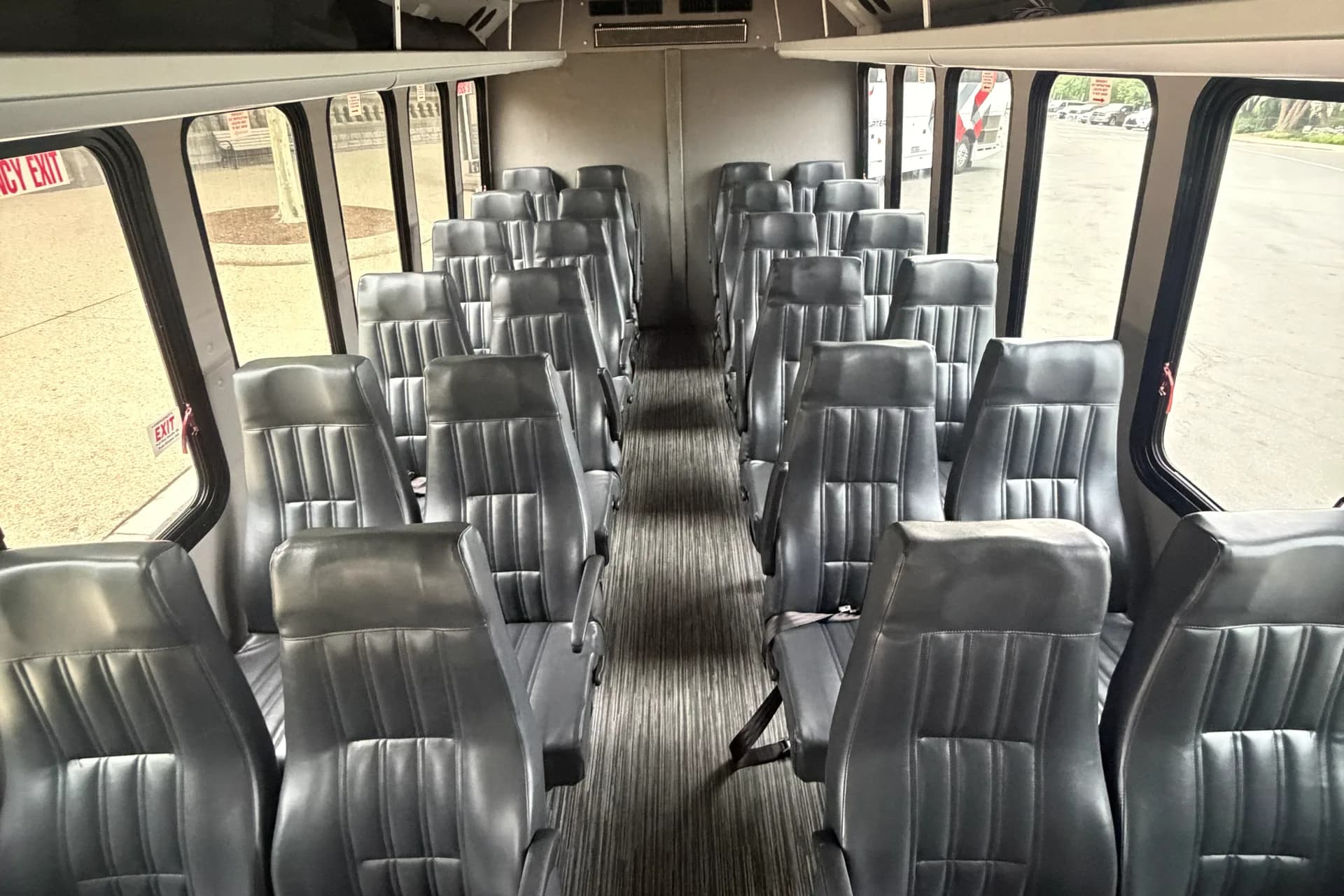
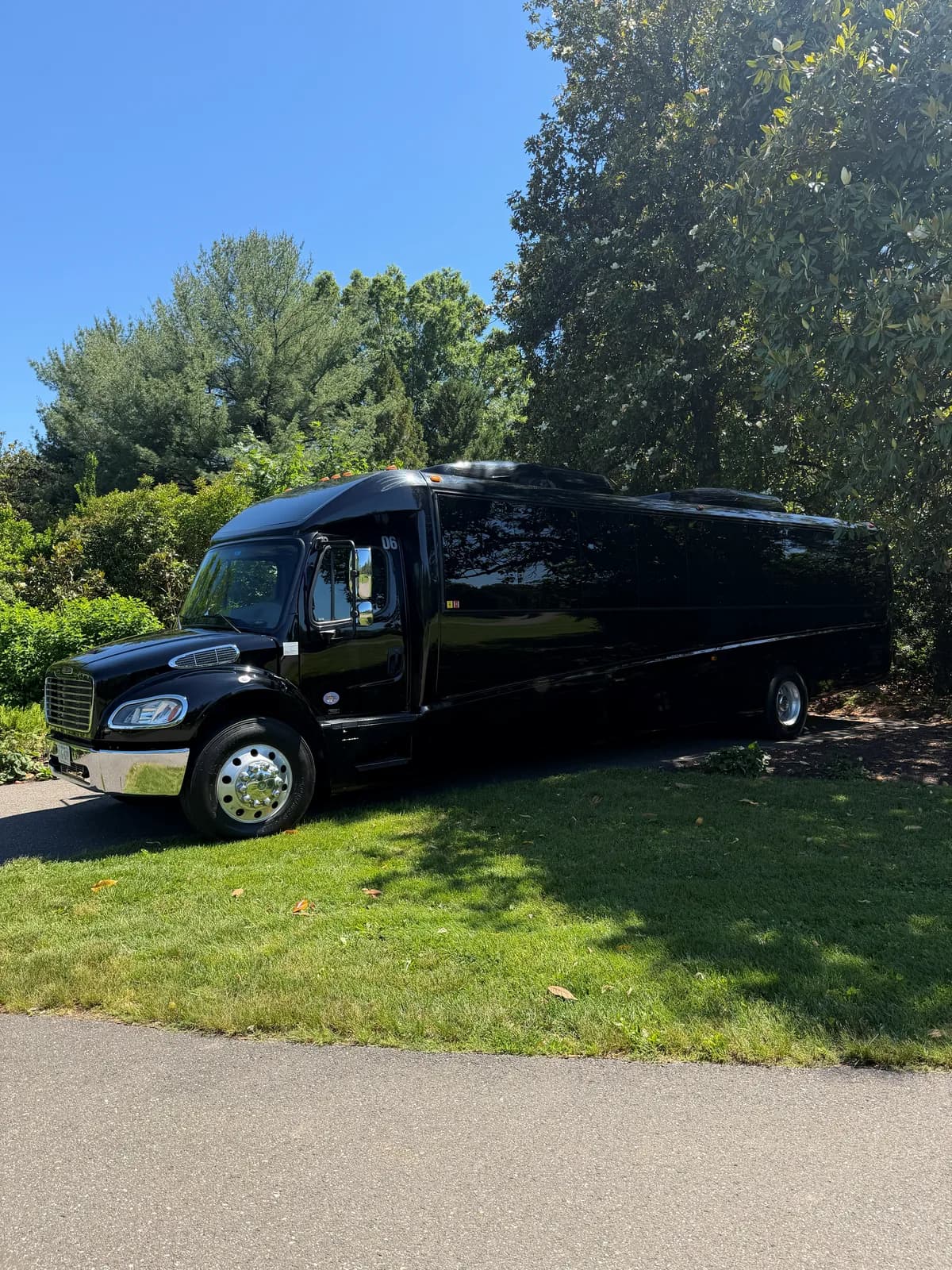
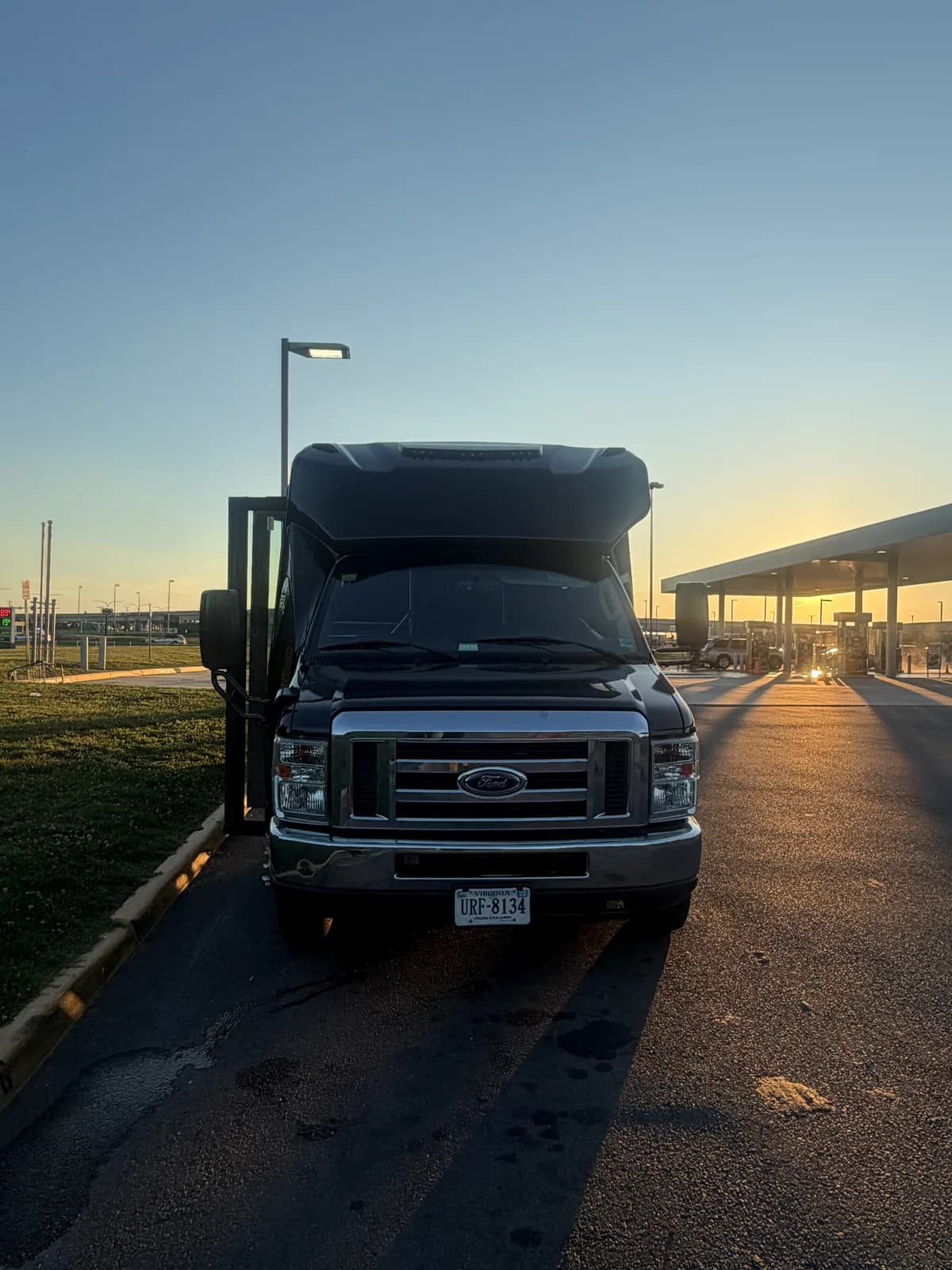
Use your employee shuttle RFP to request the proposed vehicle, passenger capacity, maintenance schedule, and replacement arrangement. Request a photograph and specification sheet for your offered configuration.
Review your selected operator against your needs for charter bus rental when you also plan large employee events. Keep event capacity outside your recurring commuting calculation.
Vehicle Configuration and Passenger Comfort
Require a configuration that supports your actual passenger group. Specify climate control, handholds, seat belts where applicable, and space for your expected baggage.
Ask your bidder to confirm the capacity after reserving wheelchair positions. Do not assume that a marketed passenger count matches your accessible operating configuration. AZA's Sprinter van seats up to 15 passengers with 12 suitcases, and the GM40 black bus seats up to 40 with 28 suitcases, so confirm your exact configuration against the fleet page before you finalize capacity.
Request vehicle age and odometer readings in miles and kilometers. Require maintenance evidence and inspection history rather than treating age alone as proof of reliability.
Boarding Assistance and Equivalent Service
Define accessible service as an operating requirement. Ask your bidder to explain wheelchair securement, boarding assistance, driver training, and replacement vehicle accessibility.
Request accommodation procedures through a private contact channel. Avoid collecting diagnoses when your operator only needs boarding and securement information.
Require your bidder to confirm applicable Americans with Disabilities Act (ADA) obligations for your proposed service. Have your legal reviewer verify the final accessibility language.
Safety Evidence and Carrier Accountability
Verify the operating carrier before you evaluate service promises. Your employee shuttle RFP should identify the legal entity responsible for transporting your workforce.
Ask whether your bidder operates vehicles directly or arranges subcontracted transportation. Require the operating carrier name for every proposed route and replacement assignment.
Registration and Insurance Verification
Check registration and insurance against your proposed operation. Request the United States Department of Transportation (USDOT) number when applicable.
Use the Federal Motor Carrier Safety Administration (FMCSA) passenger carrier search to review an interstate carrier. Check current registration and insurance rather than relying on a sales document.
Ask your risk adviser to set coverage requirements for your specific contract. Avoid copying a blanket insurance limit without checking vehicle capacity, jurisdiction, and operating status.
Driver Standards and Subcontractor Approval
Require documented driver qualification and replacement controls. Ask your bidder to explain applicable licensing, passenger endorsements, screening, and duty limits.
Request a training plan for your route, passenger assistance, and emergency communication. Assign your operator responsibility for verifying each replacement driver before service.
Require written approval before your operator changes subcontractors. Keep your prime contractor responsible for dispatch, safety documentation, and service performance throughout the agreement.
Service Levels and Breakdown Recovery
Turn reliability into a measurable contract requirement. Your employee shuttle RFP should define a service level agreement (SLA) with clear measurement rules.
Measure arrival reliability separately from departure reliability. A vehicle that leaves early creates a different passenger problem from a vehicle that arrives late.
Punctuality and Completed Trip Definitions
Define an acceptable arrival window and prohibit early departures. For a sample specification, propose 95% of arrivals within 5 minutes after schedule.
Treat the percentage as your starting negotiation target. Ask your bidder to explain the route conditions and staffing needed to support the proposed target.
Calculate punctuality from eligible measured arrivals. Report canceled trips separately so your operator cannot improve punctuality by removing failed departures from the calculation.
Define documented exceptions, such as police closures and employer shutdowns. Require evidence and your approval before your operator excludes an exception from reporting.
Backup Coverage and Escalation Ownership
Assign recovery responsibility before your first breakdown. Ask your bidder to commit to a replacement dispatch process and route-specific recovery time.
Use your employee shuttle RFP to request a dispatcher, an escalation manager, and a contact method for your evening shift. Test the contact method during your service rehearsal.
Separate black car service from your accessible shuttle recovery plan. An executive vehicle cannot automatically replace the capacity or boarding equipment your workforce requires.
Pricing Schedules and Comparable Bid Evaluation
Require a fixed pricing form with transparent operating assumptions. Your employee shuttle RFP should collect a base schedule and separately priced changes.
Request written pricing for your route before you publish a budget claim. Your recurring shuttle price depends on the operating schedule and vehicle commitment. Review AZA's published rates for a starting reference.
Base Service and Additional Charges
Separate included operating work from chargeable changes. Ask your bidder to price service hours, positioning travel, standby time, tolls, and parking explicitly.
Positioning travel means vehicle movement without your passengers, such as travel from a depot to your first stop. Request both miles and kilometers for any distance allowance.
Give airport transportation a separate optional pricing line when you need airport journeys. Keep luggage handling and waiting conditions within the airport specification.
Specify who approves overtime and route changes within your employee shuttle RFP. Require the operator to attach your written approval to any invoice that includes an additional charge.
Evaluation Weights and Invoice Controls
Publish your scoring method before proposals arrive. For an illustrative 100-point model, assign 30 points to operations and 25 points to safety.
Assign 20 points to total evaluated cost, 15 points to accessibility, and 10 points to reporting. Apply mandatory eligibility checks before weighted scoring.
Compare 3 identical scenarios: your base schedule, 20% higher demand, and 1 additional shift. Request each scenario through the same pricing form.
Reconcile your invoice against delivered service hours and approved changes. Separate service credits from pricing adjustments so your accounting reviewer can trace each deduction.
Contract Term and Renewal Controls
State your contract length and exit process before award. Your employee shuttle RFP should identify renewal approval and annual price review.
For example, propose a 12-month initial term with 1 optional 12-month renewal. Label your proposed term clearly for bidder response.
Request notice periods for termination, cancellation, and service reduction. Require a transition plan covering rider communication, operating records, and employee data return.
Approve every contract renewal against documented performance and current demand. Preserve your right to reject an extension under your negotiated agreement.
Reporting Technology and Employee Data Protection
Specify the evidence you need to manage daily service. Your employee shuttle RFP should require trip-level reporting and controlled access to employee information.
Ask your bidder to demonstrate automatic vehicle location, boarding counts, and passenger alerts. Confirm the reporting functions through a demonstration rather than a feature list.
Performance Reports and Data Definitions
Define each key performance indicator (KPI) before launch. Track completed trips, on-time arrivals, boardings, and available seats by departure.
Count a boarding as 1 passenger entering a vehicle. Keep unique rider counts separate because a return journey creates another boarding.
Use your employee shuttle RFP to request a weekly exception report and monthly performance review. Include the cause, corrective action, owner, and completion date for every service failure.
Freeze your definitions during the reporting period. Require an explanation before your operator changes a calculation, such as occupancy or cost per boarding.
Privacy Controls and Contract Exit
Limit employee information to the service requirement. Share aggregated origin areas for early route planning instead of distributing home addresses to every bidder.
Ask your security reviewer to approve access controls, retention periods, and breach notification terms. Require your bidder to identify any subcontractor that handles your employee data.
Include a usable export format, such as comma-separated values (CSV), in your employee shuttle RFP. Require data return and confirmation of deletion when your contract ends.
Procurement Schedule and Launch Acceptance
Plan procurement and operational launch as separate stages. Your employee shuttle RFP should identify the approval required before your operator starts passenger service.
Choose a timetable that reflects your vehicle availability, stop permissions, and purchasing rules. Treat the following schedule as an example, not a promised completion period.
| Task | Sample timing | Method | Difficulty |
|---|---|---|---|
| Confirm demand | Weeks 1–2 | Shift survey and attendance review | Medium |
| Validate route | Weeks 2–3 | Peak-hour drive and stop review | High |
| Collect proposals | Weeks 4–6 | Shared specification and pricing form | Medium |
| Evaluate bids | Weeks 7–8 | Eligibility checks and scored review | High |
| Rehearse service | After award | Dispatch test and route rehearsal | High |
| Review pilot | After 30 operating days | Trip reports and rider feedback | Medium |
Bid Instructions and Shared Clarifications
Give every bidder the same submission rules. State your deadline, time zone, document format, proposal validity period, and clarification process.
Require a compliance response beside each employee shuttle RFP requirement. Ask your bidder to mark full compliance, an exception, or an alternative with an explanation.
Include charter bus rental only within your optional event package when the procurement covers employee events. Keep your base commute evaluation independent.
List black car service and airport transportation within separately scored optional packages. State whether you allow separate awards for commuting and optional travel.
Pilot Approval and Operating Handover
Approve service against a written acceptance checklist. Verify your driver roster, vehicle configuration, stop permissions, dispatch contact, and rider communication before launch.
Run a peak-hour rehearsal and record actual arrival times. Correct your timetable before you invite employees onto the first scheduled departure.
Discuss optional transfers through AZA Transportation's airport transportation service while you finalize the separate airport package. Keep employee commuting requirements within your base scope.
Ask AZA Transportation for a route-specific proposal through the corporate shuttle service page when your specification is ready. Continue your final acceptance review before authorizing passenger service.
Employee Shuttle RFP Frequently Asked Questions
What should your employee shuttle RFP include?
Include your scope, timetable, fleet, safety evidence, service levels, pricing, reporting, and contract conditions. Add scoring weights and launch acceptance requirements to your employee shuttle RFP.
Should you include exact pickup addresses?
Yes. Give your bidders confirmed stops and access conditions. Keep employee home addresses private during early procurement.
Should you choose the lowest shuttle bid?
No. Apply your published scoring method after mandatory eligibility checks. Compare service delivery, accessibility, and total evaluated cost.
Can you combine airport and commuting transportation?
Yes. Separate the scope, schedule, and price for each service. Require your bidder to identify shared vehicle commitments.
How many vendors should you invite?
Invite 3 qualified vendors as a practical starting point. Adjust your shortlist to your purchasing policy and available market capacity.
Final Specification and Proposal Request
Your employee shuttle RFP gives your buying team a shared basis for evaluating service and cost. Finalize your route sheet, approval process, and scoring method before you request a proposal from AZA Transportation.
Use your completed specification to request a written commuting proposal and separately priced optional travel. Call (571) 725-8544 or book your employee shuttle after the proposal supports your timetable, accessibility needs, and recovery plan.
About the author:
Amar-Awan