Plan your Northern Virginia employee shuttle around confirmed rider demand, approved pickup locations, shift times, and measured traffic. For employee shuttle route planning Virginia employers should test the route before signing a long contract.
Start with 1 clearly defined commute problem, such as missed shift arrivals at a Reston office. Your route should connect a useful boarding point with your workplace without unnecessary detours. Treat every schedule example below as a planning exercise, rather than a promised local travel time.
Employee Shuttle Route Planning Virginia Demand Assessment
Count committed riders by departure, rather than counting your entire workforce. Your employee shuttle route planning Virginia brief needs attendance data before a vehicle selection or route drawing.
Ask for 6 details: Zone Improvement Plan (ZIP) code, preferred stop, workdays, shift start, shift finish, and access needs. Collect responses through Microsoft Forms or Google Forms, then review the totals in Microsoft Excel. Ask about return travel separately because morning participation does not establish evening demand.
Confirm Hybrid Attendance by Weekday
Build 5 weekday demand totals before choosing daily service. A Tuesday peak of 28 riders requires different capacity from a Friday total of 9. Record confirmed bookings separately from survey interest because interest alone does not fill seats.
Set a booking cutoff that your dispatch team can support. For example, request next-day reservations by 3 p.m. during your pilot. Label the cutoff as your operating policy, rather than an industry requirement.
Your employee shuttle route planning Virginia survey should distinguish preferred departures from acceptable alternatives.
Protect Employee Location Data
Share grouped ZIP codes with your vendor during initial planning. Keep names and home addresses inside your authorized human resources team unless operations require additional information. Set a written deletion schedule for survey exports and restrict access through your company account.
Employee Shuttle Route Planning Virginia Route Selection
Choose 1 primary service pattern before combining different travel needs. Your employee shuttle route planning Virginia proposal should distinguish station connections, neighborhood pickups, and parking transfers.
A station connection links rail arrivals with an office beyond convenient walking distance. A neighborhood route serves a concentrated rider cluster, such as employees near Herndon. A parking transfer connects an approved remote lot with your workplace entrance.
Match Rider Clusters to Northern Virginia Corridors
Group Reston and Herndon demand separately from Arlington and Alexandria demand. Test a Tysons destination against actual rider origins before adding stops along Interstate 495. Compare a direct station connection with a longer neighborhood route using measured travel time.
Use AZA Transportation's employee shuttle service to discuss recurring commute needs after you confirm demand. Send your preferred operating days, passenger count, and workplace arrival deadline with your inquiry.
Separate Daily Commuting From Business Travel
Keep charter bus rental requests outside your weekday commuter timetable. Treat black car service bookings as separate executive travel assignments. Schedule airport transportation transfers around flight details, luggage, and terminal access rather than employee clock-in times.
Your employee shuttle route planning Virginia budget should identify each travel purpose before procurement compares proposals. Separate scope prevents a conference trip from consuming the vehicle your employees expect for the evening commute.
Approved Pickup Stops and Accessible Boarding
Approve the exact boarding location before publishing a stop. For employee shuttle route planning Virginia teams need property permission, pedestrian access, and a usable vehicle approach.
Inspect the actual curb or parking aisle rather than approving a map pin. Record the entrance, waiting area, vehicle exit, and contact responsible for access. Check lighting before an early shift and repeat the inspection during the evening return window.
Verify Station and Parking Permissions
Request written boarding approval from the station operator or property manager. A public station name does not grant permission for a private shuttle to occupy a bus bay. Confirm parking duration and passenger pickup rules before advertising a park-and-ride connection.
Consult the Virginia Department of Transportation (VDOT) park and ride guidance while identifying potential commute meeting points. Ask the responsible operator to confirm your particular shuttle arrangement. Keep your employee shuttle route planning Virginia stop register current after every access change.
Check Walking Access and Vehicle Fit
Set an initial walking target, such as 0.25 miles (0.4 kilometers), then assess the complete pedestrian route. Reject a short walk that requires an unsafe crossing or lacks an accessible path. Confirm curb access, lift operation, securement space, and boarding assistance with your selected operator.
Ask your operator to test turning clearance with the actual vehicle assignment. A smaller replacement vehicle still needs enough accessible capacity for your booked passengers. Record any access restriction beside the stop address.
Your employee shuttle route planning Virginia inspection should document an alternative boarding point before construction closes the preferred entrance.
Peak Traffic Timing and Shift Arrival Targets
Build your timetable backward from the required workplace arrival. Your employee shuttle route planning Virginia schedule needs measured driving, boarding, and recovery time.
Measure morning and evening movements separately along your proposed corridor. Compare Interstate 66, Interstate 495, and local street alternatives only where each option fits your destination. Check current incidents and construction before dispatch rather than relying on a saved travel estimate.
Calculate Departure Time From Measured Travel
Use a sample 9 a.m. shift to test your arithmetic. Target an 8:45 a.m. workplace arrival, allowing 15 minutes before clock-in. Subtract 30 minutes driving, 5 minutes boarding, and 10 minutes recovery to reach an 8 a.m. departure.
The 45-minute journey allowance represents a worked example, not a verified Reston or Tysons travel time. Replace every allowance with your field measurements. Your employee shuttle route planning Virginia worksheet should retain the date and direction of each test.
Test Rail Transfers and Evening Returns
Give rail passengers enough time to exit the station and reach your approved pickup location. Test the connection with employees during the intended service window. Record missed connections instead of assuming every train arrival produces an immediate boarding.
Plan your Washington, DC connections around the full journey, including station access and workplace security. Publish a final evening departure and a missed-shuttle contact. Avoid open-ended waiting that shifts delays onto every passenger already aboard.
Vehicle Capacity and Shuttle Frequency
Size your vehicle against the busiest confirmed departure. For employee shuttle route planning Virginia teams should check usable seating after accessibility and equipment arrangements.
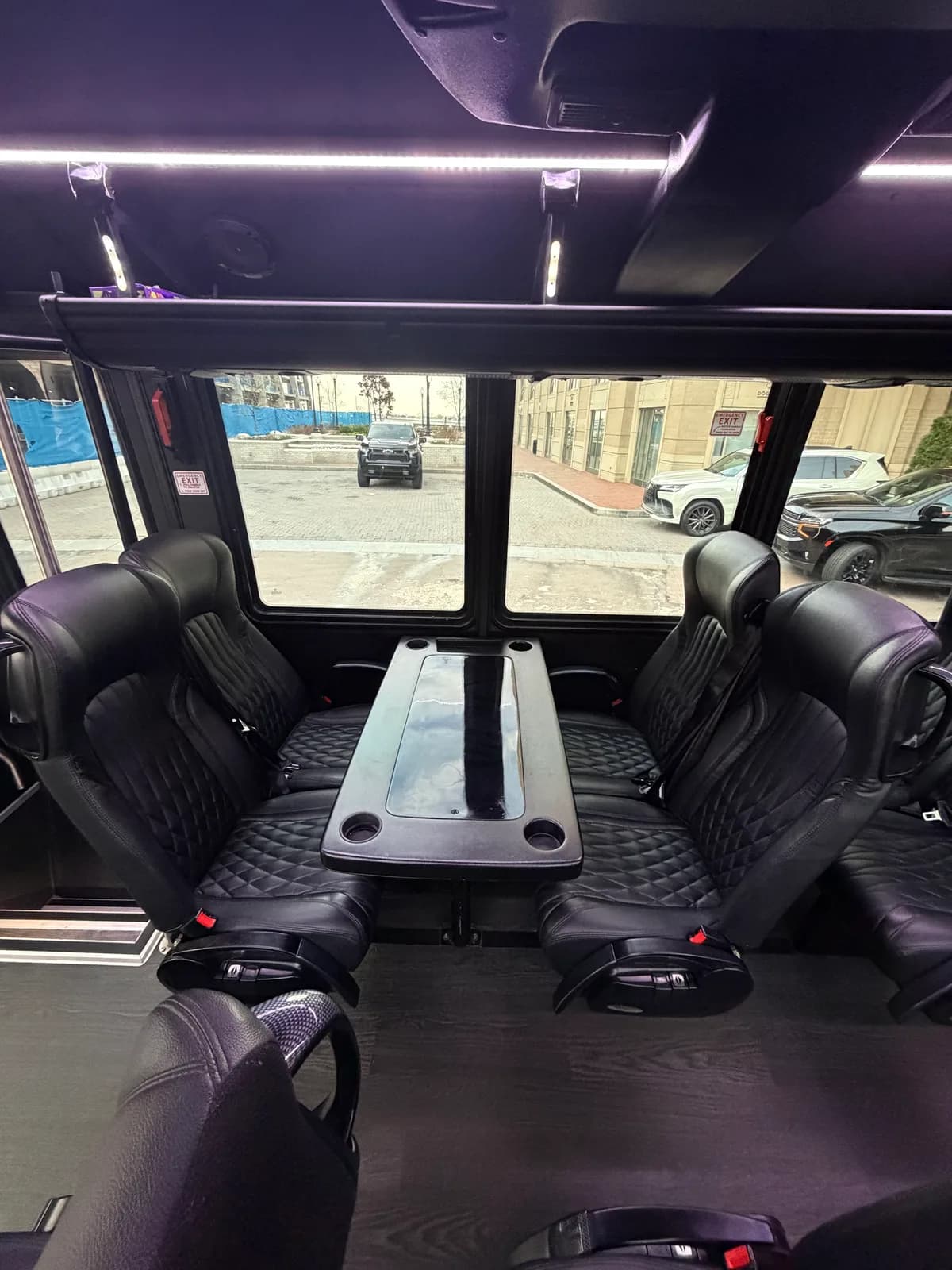
Ask for a seating plan rather than relying on a vehicle category. A nominal capacity does not describe the final layout after wheelchair securement or equipment storage. Confirm a comparable replacement arrangement before approving the operating contract.
Calculate Capacity From the Route Cycle
Define your route cycle as driving, boarding, unloading, and recovery time combined. A 60-minute cycle needs 3 vehicles to support departures every 20 minutes. The calculation divides cycle time by departure spacing and rounds up to a whole vehicle.
Test 24 riders against a hypothetical 30-seat layout to calculate 80% occupancy. Keep the example separate from an operator's promised vehicle configuration. Your employee shuttle route planning Virginia capacity sheet should flag departures that exceed confirmed usable seating.
Keep Related Services Within Separate Assignments
Reserve charter bus rental capacity for conference or event movements with their own passenger totals. Assign black car travel separately when an executive needs a private itinerary. Keep airport transportation assignments separate when flight schedules overlap your commuter peak.
Discuss office connections through the corporate shuttle service during the planning stage. Your written scope should identify which vehicle serves commuting and which assignment covers business travel.
Published Rates and Recurring Shuttle Budget Controls
Use published base rates only as a starting point. Your employee shuttle route planning Virginia cost comparison needs a written quote for the actual operating schedule.
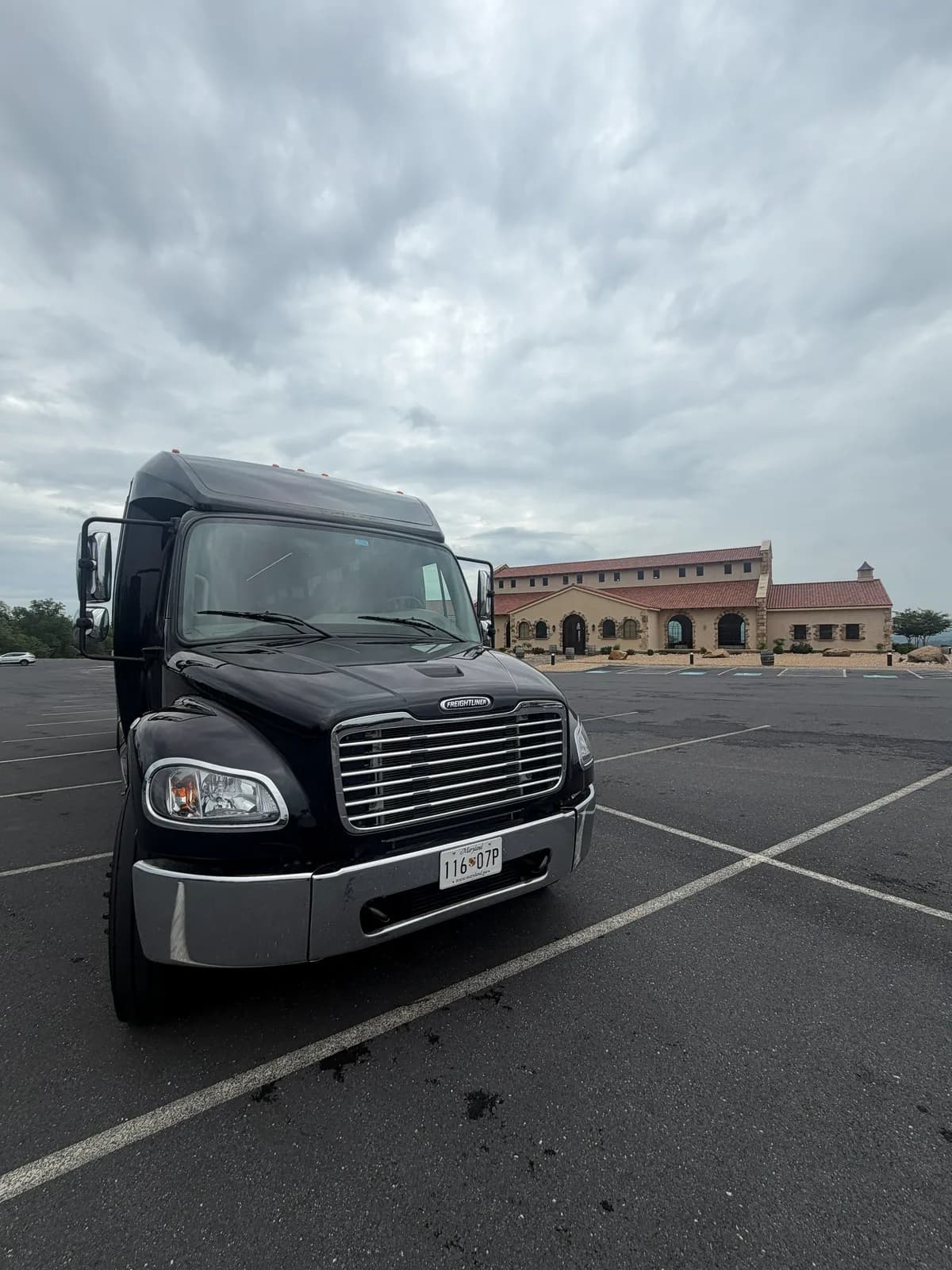
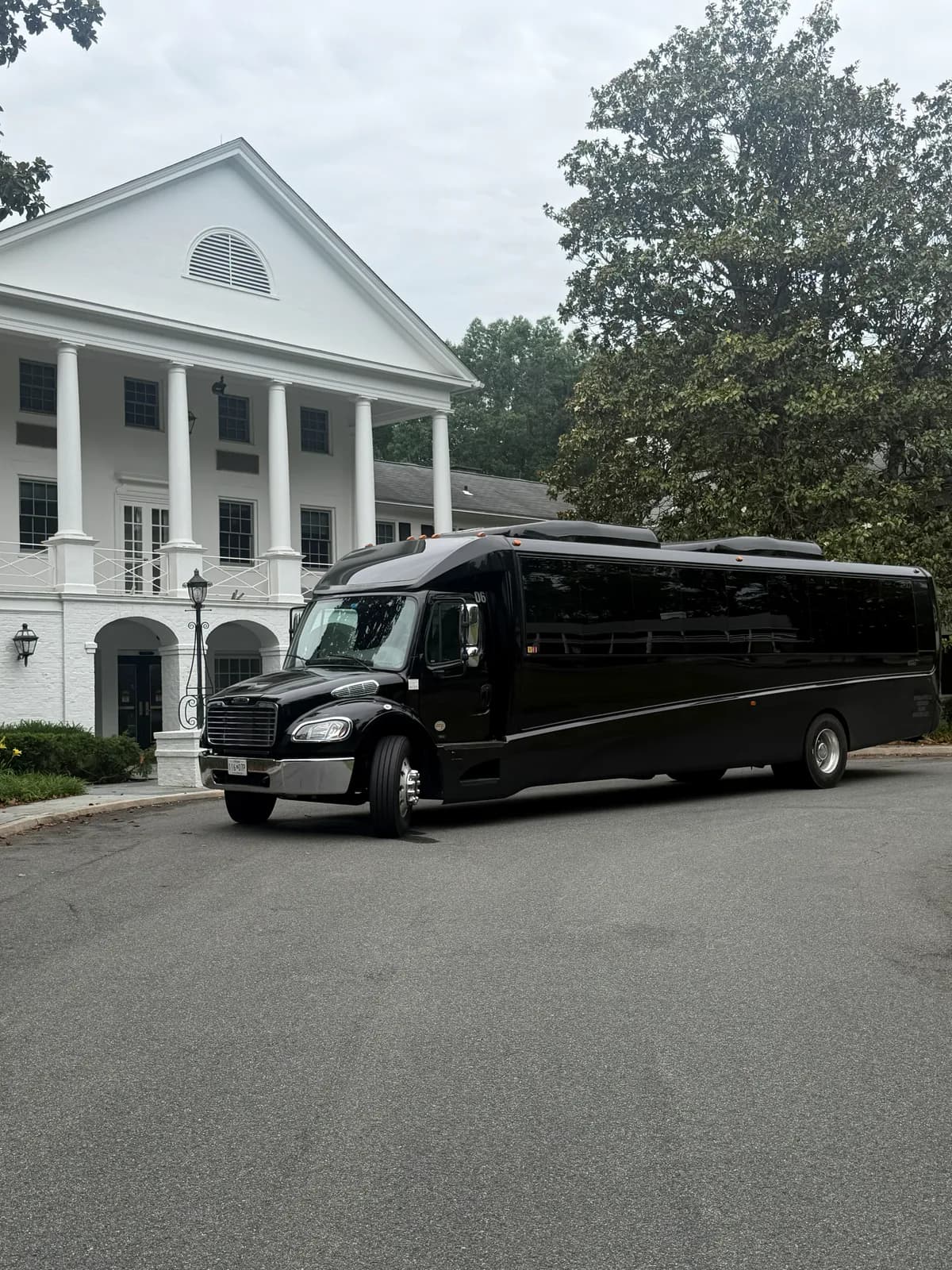
AZA Transportation publishes a Mercedes Sprinter base rate of $150 per hour, with a 4-hour minimum. The published capacity reaches 15 passengers, subject to your confirmed vehicle assignment. The GM40 Black Bus starts at $180 per hour, with a 4-hour minimum and capacity up to 40 passengers. Review AZA's published rates before you request a quote.
Separate Base Charges From the Contract Total
Review the published vehicle rates before requesting your recurring-service proposal. The 4-hour base calculations equal $600 for the Sprinter and $720 for the GM40. Those calculations do not establish an all-inclusive shuttle price or a recurring contract rate.
Ask your quote to identify driver time, vehicle repositioning, tolls, waiting, gratuity, and applicable taxes. Confirm whether separate morning and evening assignments trigger separate minimum charges. Date your employee shuttle route planning Virginia pricing sheet because the operator can update published rates.
Compare Equivalent Operating Scope
Send every bidder the same route, departure count, service calendar, accessibility requirements, and backup expectations. Compare monthly totals only after matching those details. Request a recurring contract proposal rather than assuming the public hourly rate determines your final agreement.
Keep charter bus event spending in a separate budget line. Track black car spending against executive assignments. Record airport transportation charges against airport travel so your commuter cost calculation reflects employee transportation alone.
Divide your verified monthly shuttle total by completed passenger journeys to calculate cost per boarding. Count a morning ride and evening ride as 2 journeys. Your employee shuttle route planning Virginia report should show the counting method beside the result.
Planning Calendar and Pilot Preparation
Use a staged launch with named owners and review dates. Your employee shuttle route planning Virginia calendar should reserve time for access approval before employee announcements.
Treat the following calendar as a suggested project plan, rather than a vendor availability commitment. Extend the timeline when property approval or accessible vehicle confirmation requires additional work. Assign 1 internal coordinator to resolve decisions across procurement, facilities, and human resources.
| Task | Suggested timing | Method | Difficulty |
|---|---|---|---|
| Confirm weekday demand | Week 1 | Survey and attendance review | Low |
| Approve boarding stops | Week 2 | Property approval and site inspection | High |
| Test peak travel | Week 2 | Morning and evening timed runs | Medium |
| Confirm vehicle and quote | Week 3 | Layout review and written scope | Medium |
| Run service pilot | Weeks 4–5 | Boarding log and delay review | Medium |
| Approve recurring timetable | Week 6 | Performance review and contract decision | Medium |
Publish a Complete Rider Brief
Give each rider the stop address, landmark, departure time, return schedule, and dispatch contact. Include a photograph of the approved boarding area when your company permits photography. Explain reservation rules through a short email and your employee portal.
Publish your employee shuttle route planning Virginia timetable with a revision date and route identifier. Replace outdated copies after a stop change. Ask supervisors to distribute the current schedule to employees without routine computer access.
Rehearse Disruption Handling Before Launch
Agree on a backup dispatch contact, replacement procedure, and employee notification method. Test a vehicle failure scenario before your first passenger departure. Record who authorizes replacement travel and who approves additional expense.
Ask the operator to identify the applicable operating authority and insurance for your exact journey. Confirm the scope for Virginia-only commuting and any Washington, DC crossing. Avoid treating a provider's general service description as confirmation for every proposed itinerary.
Keep your employee shuttle route planning Virginia contact list available to the supervisor responsible for each shift.
Pilot Performance and Route Adjustment
Review boarding counts, arrival reliability, and cost before extending your contract. Your employee shuttle route planning Virginia pilot should separate service failure from low passenger demand.
Use a suggested 10-workday pilot to compare your timetable with actual operations. Record scheduled arrival, actual arrival, boardings, missed connections, and complaints for each departure. Label pilot targets as your management decisions rather than advertised operator guarantees.
Set Clear Review Triggers
Choose an arrival target, such as 95% of trips reaching work before your agreed deadline. Calculate the percentage from completed trips, then report cancellations separately. A missed trip should never disappear because your arrival calculation excludes canceled departures.
Review the cause after 2 late arrivals on the same departure within 5 workdays. Add recovery time when traffic drives the delay. Change the stop sequence when repeated boarding congestion explains the problem.
Adjust Low Demand Without Breaking Connections
Review a departure after 5 operating days below your chosen occupancy threshold. Compare a smaller vehicle with fewer departures before cutting service. Protect the final return connection because losing the evening ride undermines the usefulness of the morning trip.
Discuss your pilot results with AZA Transportation before approving a permanent operating pattern. Your employee shuttle route planning Virginia review should record each change, the reason, the owner, and the effective date.
Frequently Asked Questions
Can you start with a Metro connection instead of neighborhood pickups?
Yes. You can test 1 approved station pickup and 1 workplace destination. Confirm rail connections, boarding permission, and return demand before expanding.
How many pickup stops should your first route include?
Start with 1–3 approved stops as a pilot assumption. Add a stop only after checking demand and total travel time.
Do you need employee home addresses for initial planning?
No. You can begin with grouped ZIP codes and preferred meeting points. Restrict personal address collection to a documented operational need.
Do published hourly rates establish your recurring shuttle price?
No. You need a written proposal covering minimum hours, operating days, vehicle assignment, and additional charges. Confirm the complete total before signing.
Can you connect Northern Virginia employees with Washington, DC offices?
Yes, with a confirmed operator and approved itinerary. Check cross-jurisdiction operating scope, exact boarding permission, and measured peak travel before publishing departures.
Launch Your Northern Virginia Shuttle Plan
Build your route from committed riders, approved stops, measured timing, and a confirmed vehicle layout. Test the complete morning and evening service before renewing your contract. Call (571) 725-8544 or send your rider totals, workplace address, and shift schedule to AZA Transportation to request a tailored shuttle proposal.
About the author:
Amar-Awan