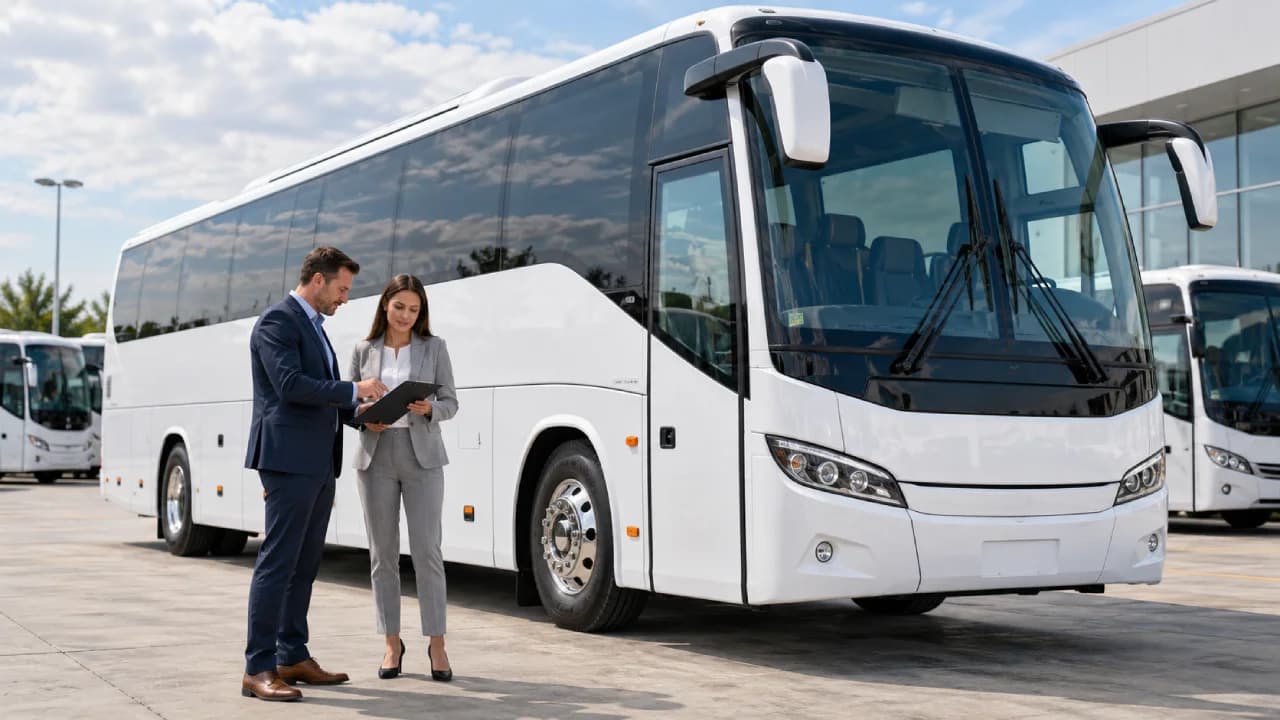
The right vehicle depends on your confirmed passenger count, luggage, trip length and schedule. This group transportation vehicle size guide compares options for 5, 15, 30, 40 and 56 passengers, with practical advice for choosing a vehicle that fits your trip. For a small executive ride, an SUV may work. A Sprinter van suits a group of 15, while a 30- or 40-passenger bus fits medium groups. A 56-passenger motorcoach is usually the best match for a large group traveling together.
AZA Transportation serves Washington, DC, Maryland, Northern Virginia and selected East Coast destinations with SUVs, Sprinter vans, minibuses and motorcoaches. Review the AZA fleet and group transportation services to compare available options. Vehicle configurations and amenities can vary, so confirm the exact capacity and luggage allowance when requesting a quote.
Quick Vehicle Size Guide: 5 to 56 Passengers
Use this table as a starting point. The best vehicle is not always the one with the most seats; it is the one that carries everyone and their belongings comfortably while meeting the route and timing requirements.
| Group size | Vehicle to consider | Typical use | Check before booking |
|---|---|---|---|
| 5 passengers | Cadillac Escalade SUV | Airport transfer, executive trip, small family outing | Passenger and suitcase count |
| 15 passengers | Mercedes Sprinter van | Small corporate team, wedding party, airport group | Exact seat layout and luggage space |
| 30 passengers | Mini Party Bus (GM33) | Company outing, school group, event shuttle | Equipment and longer-trip comfort |
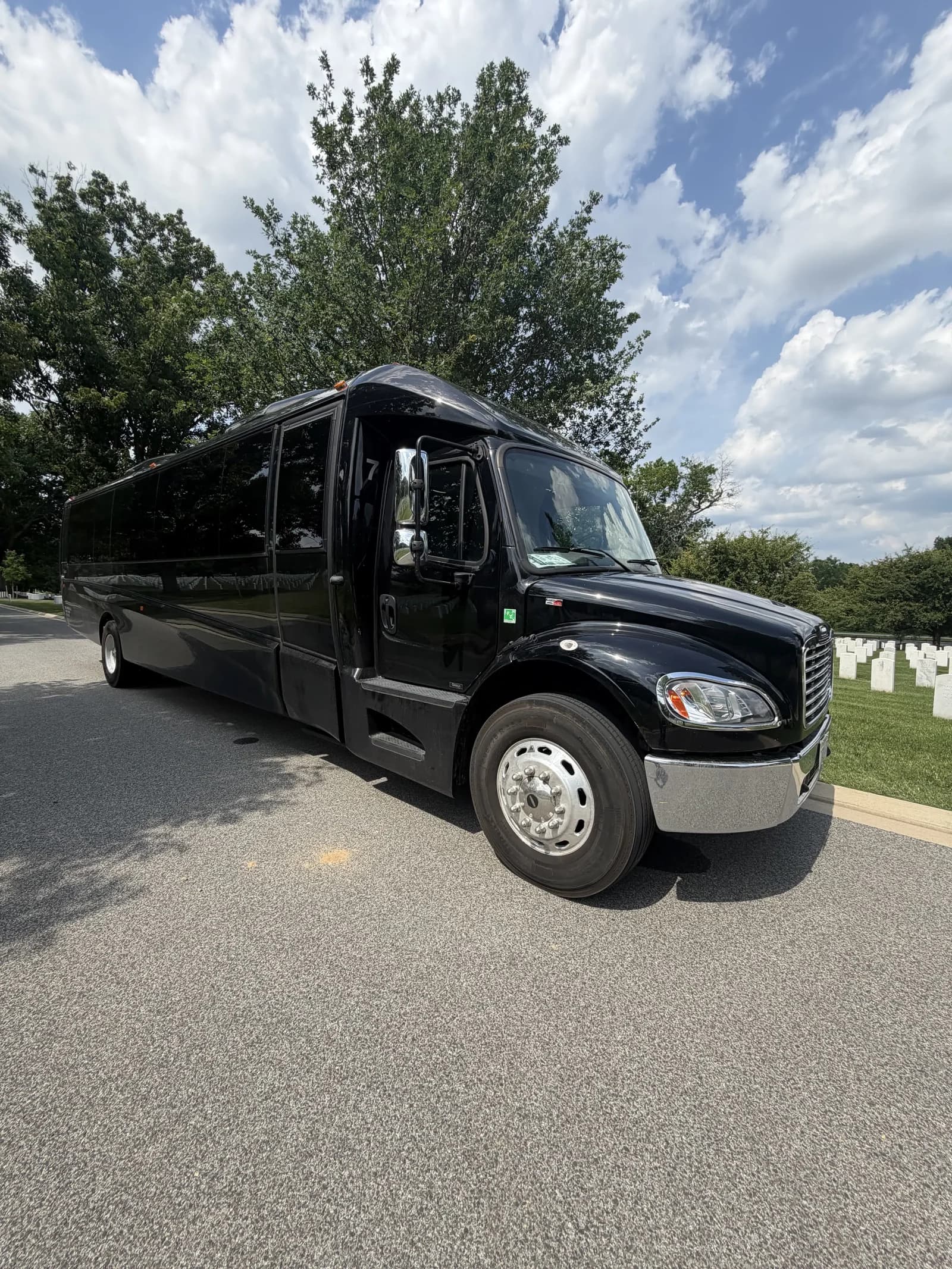
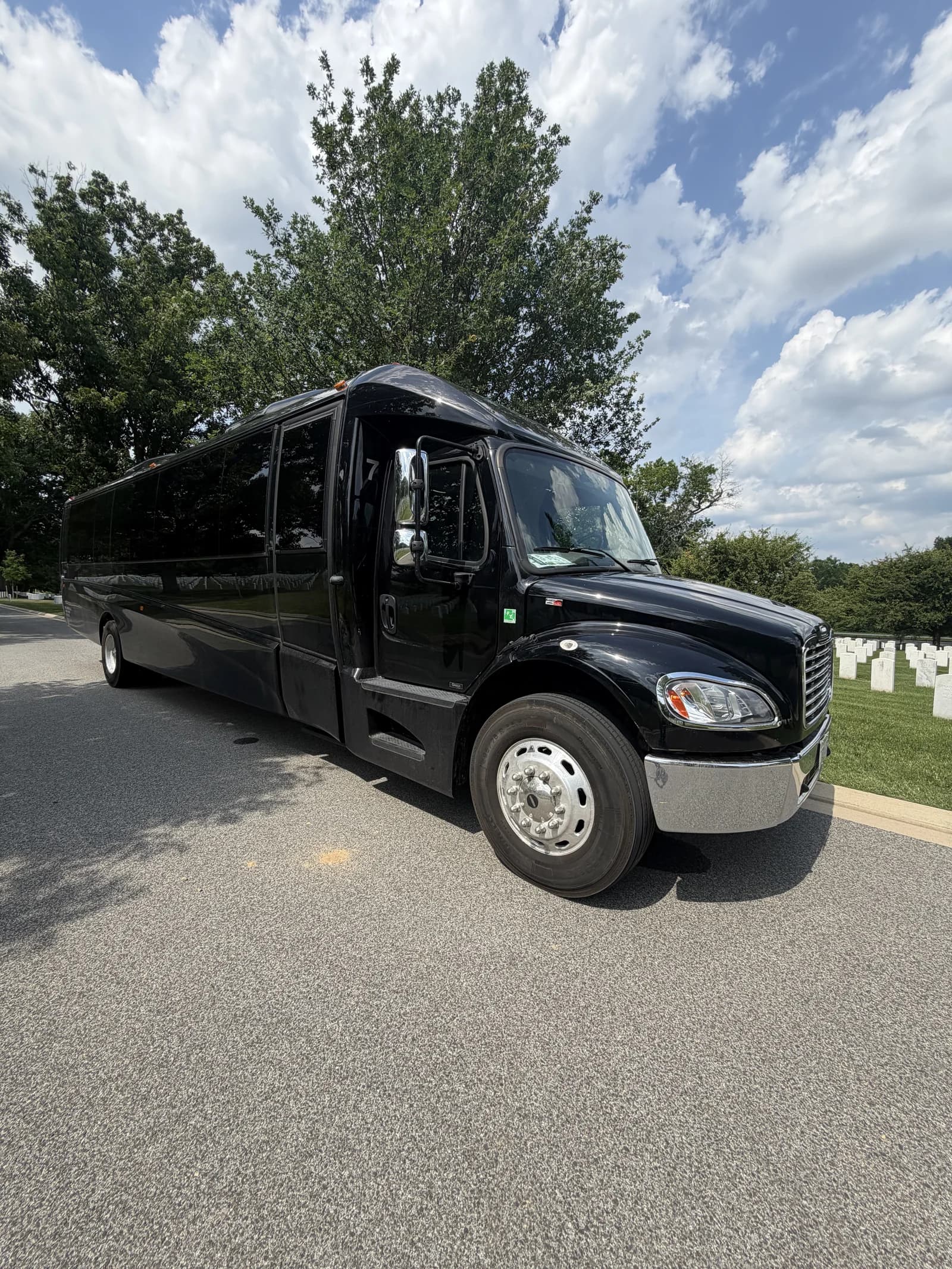
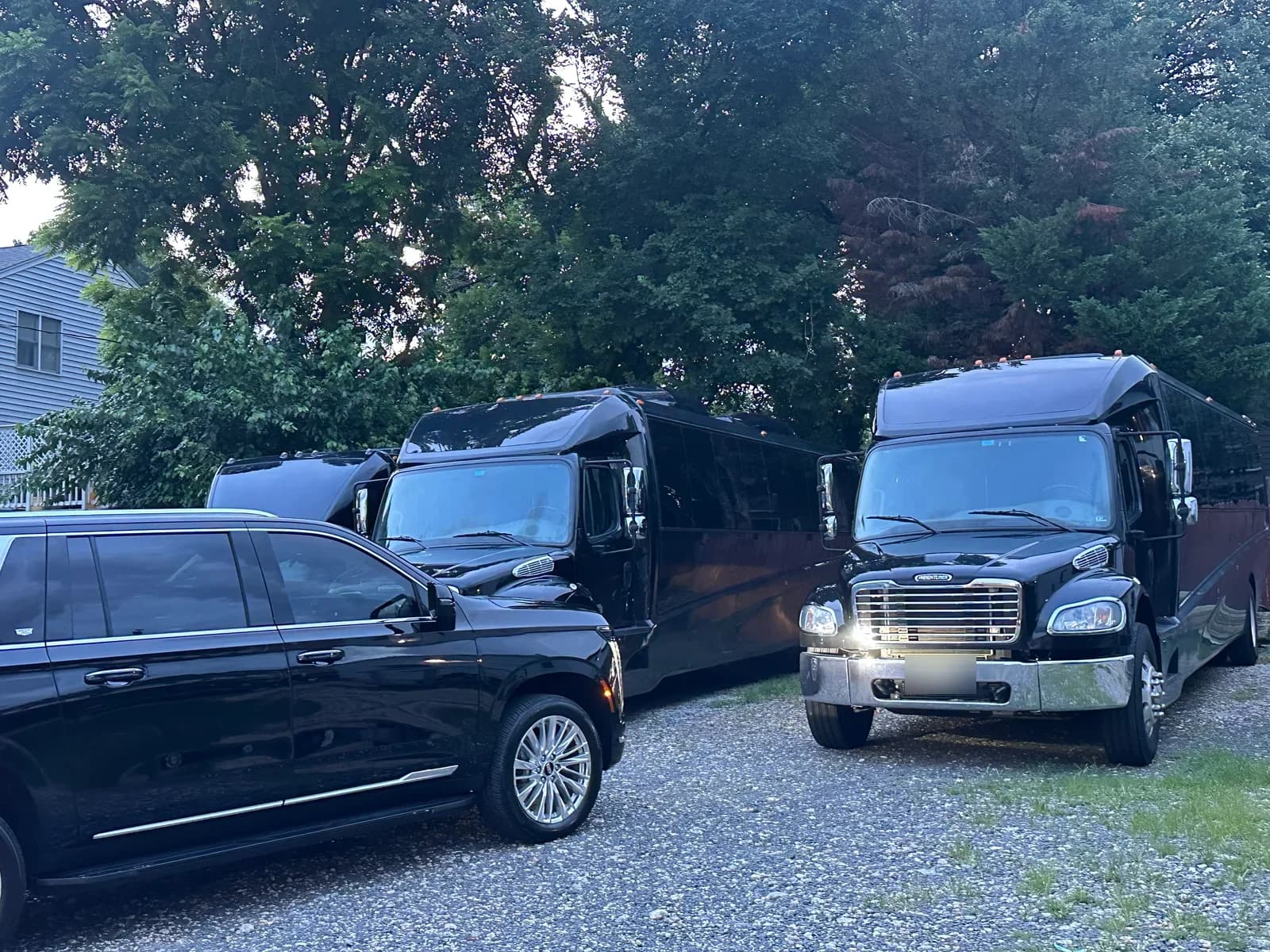
| 40 passengers | GM40 black bus | Wedding guests, conferences, group tours | Luggage volume and route access |
| 56 passengers | VanHool motorcoach | Large school group, sports team, long-distance trip | Underfloor storage and onboard amenities |
These capacities reflect AZA Transportation's published fleet options: a 5-passenger Cadillac Escalade, a 15-passenger Sprinter van, a 30-passenger Mini Party Bus (GM33), a 40-passenger GM40 and a 56-passenger VanHool motorcoach. Confirm the assigned vehicle's legal seating capacity before travel.
What Vehicle Fits 5 Passengers?
For five passengers, a luxury SUV is often the most practical option for a direct transfer, executive meeting, airport pickup or short private trip. It offers a more compact footprint than a bus and can make hotel entrances, parking areas and urban drop-offs easier to manage. This option is especially useful when the group values privacy and does not need a shared passenger cabin for a larger party.
Passenger count alone does not tell the whole story. Five adults with carry-on bags may fit differently from five travelers carrying full-size suitcases, strollers or presentation equipment. Ask the provider to confirm both passenger capacity and luggage capacity. If the group has bulky bags, a larger vehicle may be more comfortable even when seats are available.
For executive travel or an airport run around the Washington, DC region, compare the Cadillac Escalade option against your group's luggage needs. The Escalade carries up to 5 passengers and 5 suitcases. Do not assume that every SUV configuration seats the same number of passengers or holds the same number of bags.
What Vehicle Fits 15 Passengers?
A passenger Sprinter van is a strong starting point for 15 travelers. Common uses include airport transfers, small wedding parties, business teams, family events and short group excursions. A van can be easier to load and maneuver than a full-size coach, particularly when pickups involve downtown streets, hotel drives or several stops.
Check the exact seating configuration before booking. A vehicle advertised for 15 passengers may count the driver differently, and luggage capacity can change with the seating layout. If all 15 people have checked bags, the group may need a different arrangement or an additional luggage solution. Tell the transportation provider whether the trip includes suitcases, sports equipment, musical instruments or other bulky items.
For a group traveling to or from Dulles International Airport (IAD), Ronald Reagan Washington National Airport (DCA) or Baltimore/Washington International Thurgood Marshall Airport (BWI), share the flight schedule and the number of bags with your provider. Explore the Sprinter van service and request confirmation of the vehicle's 15-passenger, 12-suitcase seating and storage details.
What Vehicle Fits 30 Passengers?
A 30-passenger minibus or mid-size bus can suit corporate outings, school activities, church groups, wedding guest transfers and event shuttles. This size offers more capacity than a van without automatically moving the entire group into a full-size motorcoach. It can be a practical fit for groups traveling between hotels, venues, campuses and nearby destinations.
For 30 passengers, think about how long everyone will stay onboard. A short transfer between a hotel and a conference venue has different needs from a day trip with several hours on the road. Seat comfort, climate control, step access, overhead storage and the amount of personal space all matter more as travel time increases.
Luggage and equipment can change the choice. A sports team may carry duffel bags, coolers and equipment; a school group may have backpacks and project materials; a corporate team may bring display stands or event supplies. Ask whether the selected bus has enough storage for both people and gear. See AZA's Mini Party Bus for a published 30-passenger, 22-suitcase capacity reference, then confirm the specific configuration for your date.
What Vehicle Fits 40 Passengers?
A 40-passenger bus is a good option for wedding guests, company events, conference shuttles, school trips and organized tours. It can keep a medium-to-large group together, simplify headcounts and reduce the coordination required when several vehicles travel on the same schedule. A single vehicle can be especially useful when everyone needs to arrive at a venue at the same time.
For trips lasting several hours, ask about reclining seats, climate control, overhead storage, restroom access and power outlets. Amenities vary by vehicle. Some models provide power outlets, but availability and outlet placement are not universal. Confirm whether outlets are available at each seat, in selected rows or not at all. Do the same for Wi-Fi, audio systems and onboard restrooms.
A 40-passenger bus may not be ideal for every route. Check venue access, low-clearance areas, narrow driveways, loading zones and parking arrangements. If the group has substantial luggage, confirm the storage allowance instead of relying on seat count alone. AZA's GM40 black bus is listed for up to 40 passengers and 28 suitcases; ask the team to match the vehicle to your trip details.
What Vehicle Fits 56 Passengers?
A full-size motorcoach is the natural option for a group of 56 passengers traveling together. It suits large school trips, sports teams, conferences, multi-stop tours, family reunions and long-distance group travel. A coach can reduce the need to coordinate multiple pickup times and gives the group one shared arrival plan.
Many full-size motorcoaches seat about 40 to 56 passengers, although the exact number depends on the model and interior layout. A 56-passenger coach is a common high-capacity option. AZA lists a 56-passenger VanHool motorcoach with room for up to 55 suitcases, but you should still confirm the assigned vehicle's seat count and luggage configuration.
Full-size coaches often provide underfloor luggage bays, overhead racks and amenities designed for longer journeys. Features differ by vehicle, so ask about restroom availability, charging outlets, Wi-Fi, reclining seats and accessibility requirements. A full coach is larger and needs suitable pickup and parking space. Confirm the route and loading location before finalizing the reservation.
How to Choose the Right Bus Size
1. Confirm the Real Passenger Count
Count every person who will ride, including children, chaperones, staff, coaches and guests joining for only one leg. Do not rely on invitation totals or early RSVPs. If the count is still changing, tell the provider the current number and the likely maximum. Booking close to the vehicle's limit can leave little room for late additions.
2. Count Luggage and Equipment Separately
Passenger seats and cargo capacity are different measures. List checked bags, carry-ons, sports gear, musical instruments, mobility devices and event materials. A bus with enough seats may still lack the storage your group needs. Ask the operator to confirm the luggage allowance and where items can be stored safely.
3. Consider Travel Time and Comfort
Short transfers can work well in smaller vehicles. Longer journeys call for attention to seat comfort, legroom, climate control, rest stops and onboard facilities. If passengers will remain onboard for several hours, discuss a larger vehicle when the group is near the upper seating limit.
4. Check Pickup Access and Route Restrictions
Share exact pickup and drop-off addresses, not just venue names. A full-size coach may need a designated bus lane, larger turning area or approved loading zone. Hotels, schools, stadiums and event venues can have different access rules. Early planning helps avoid last-minute route changes.
5. Compare One Vehicle With Two
One larger vehicle can simplify communication and keep a group together. Two smaller vehicles may be useful when the group has separate departure points, split schedules or access limitations. Compare the full trip plan, including arrival timing, luggage, driver coordination and total cost, rather than comparing seat prices alone.
Charter Bus Sizes, Dimensions and Capacity Questions
Questions such as how long a charter bus is, or how a tour bus and coach bus compare in size, do not have one universal answer. Vehicle dimensions vary by make, model and configuration. A full-size motorcoach is substantially longer than an SUV or Sprinter van, so operators need the route, turning space and parking plan before confirming suitability.
The same applies to weight. How much a charter bus weighs depends on the vehicle model, build, fuel, passengers and cargo. Use the manufacturer's specifications or ask the operator for the assigned vehicle's details rather than relying on a single generic figure. Passenger capacity, gross vehicle weight rating and luggage limits are different specifications.
Related questions about how many seats a bus has, or how many people a coach bus can hold, all point to the same practical rule: verify the exact vehicle, not just the vehicle category. Shuttle bus, motorcoach and charter bus sizes can describe very different configurations. A high figure quoted for a different bus type, such as a transit or double-decker vehicle, does not apply to a standard US charter motorcoach.
There is no standard capacity figure that applies to every bus. The capacity of a charter bus depends on the model and approved seating layout. Do not assume that a vehicle can carry more people because a different bus type has a higher advertised capacity. Ask the provider to confirm the legal passenger limit and whether the driver is included in the stated number.
A Practical Booking Checklist
Before requesting a quote, prepare five details: your confirmed passenger count, luggage and equipment list, travel date and schedule, pickup and drop-off addresses, and any accessibility or amenity requirements. Share the longest travel segment and whether the group needs several stops. These details help the provider recommend a vehicle based on the trip rather than a seat number alone.
AZA Transportation supports group travel, corporate transportation, airport transfers, events and tours across the DMV region and selected East Coast destinations. Use the services page to review options, then contact AZA Transportation with your itinerary. Request written confirmation of passenger capacity, luggage space, included amenities, pickup instructions and any extra charges before you finalize the booking.
Frequently Asked Questions
How Many Seats Does a Charter Bus Have?
A full-size charter motorcoach commonly seats about 40 to 56 passengers, but the exact count depends on the model and layout. Smaller minibuses and shuttle buses have lower capacities. Confirm the specific vehicle assigned to your trip.
How Many People Can a Charter Bus Hold?
A standard full-size charter coach often holds up to 56 passengers. Other charter vehicles may carry around 15, 30 or 40 passengers. The legal capacity listed for the actual vehicle determines the maximum.
How Many People Fit on a Coach Bus With Luggage?
The passenger limit depends on approved seating, while luggage depends on storage space. A coach may have enough seats for the group but not enough room for every suitcase or piece of equipment. Confirm both limits before booking.
Do Charter Buses Have Power Outlets and Wi-Fi?
Some charter buses offer power outlets and Wi-Fi, but amenities vary. Ask whether outlets are available at every seat or only in selected areas, and confirm whether Wi-Fi is included for your specific vehicle.
How Long Is a Charter Bus?
Length varies by make, model and configuration. Full-size motorcoaches are longer than passenger vans and minibuses. Ask the operator for the vehicle's dimensions when your pickup area, parking space or route has restrictions.
How Much Does a Charter Bus Weigh?
Weight varies by model, construction, fuel, passenger load and cargo. The vehicle manufacturer's specifications provide the most accurate figures. Ask the transportation provider if weight limits affect venue access or route planning.
What Size Bus Should I Book for 30, 40 or 56 Passengers?
A 30-passenger group can consider a mid-size bus, 40 passengers may fit a larger bus, and 56 passengers generally need a full-size motorcoach. Luggage, trip duration, amenities and route access can change the recommendation. Get the operator to confirm the vehicle configuration.
Which Vehicle Size Is Right for Your Next Trip?
The best vehicle matches your passenger count, luggage, travel distance and pickup conditions. A luxury SUV can suit 5 passengers, a Sprinter van can work for 15, a mid-size bus can fit 30, a larger bus can serve 40, and a 56-passenger motorcoach can move a large group together. Call (571) 725-8544 or request a quote with your passenger count and itinerary, and AZA will match the right vehicle to your trip in Washington, DC, Maryland and Northern Virginia.
About the author:
Amar-Awan