Charter bus travel saves you money, removes driving stress, and cuts your group’s carbon footprint compared to driving yourself. A single motorcoach replaces up to 15 separate cars, so your group travels together instead of splitting into multiple vehicles.
The benefits of charter bus travel over driving yourself extend beyond convenience. You get a licensed professional driver and amenities no personal car offers in 2026. This guide breaks down the cost, safety, comfort, and environmental benefits of charter bus travel. You will also learn how to choose the right coach for your group.
What Are the Main Benefits of Charter Bus Travel Over Driving Yourself?
The main benefits of charter bus travel are lower costs, professional drivers, group safety, onboard comfort, and reduced emissions. Each factor solves a specific problem group organizers face when driving themselves.
- Lower cost per passenger than fuel, tolls, and parking combined
- Professional drivers who handle traffic, navigation, and road conditions
- Group safety standards enforced by the Department of Transportation (DOT)
- Onboard comfort features like reclining seats and climate control
- Reduced emissions per passenger compared to multiple personal cars
All 5 factors compound when your group travels 100 miles (161 km) or more. Longer trips multiply fuel costs, driver fatigue, and vehicle wear, which makes charter bus travel more valuable as distance increases.
Group organizers also face scheduling headaches when a trip relies on multiple personal cars. Someone always arrives late, takes a wrong turn, or needs a fuel stop the group did not plan for. Charter bus travel removes that problem, since 1 driver and 1 vehicle carry the entire group on schedule.
How Does Charter Bus Travel Reduce Your Total Trip Cost?
Charter bus travel reduces your total trip cost by replacing multiple cars, fuel tanks, and parking fees with one vehicle. Your group splits a single bill instead of paying for 5 or 6 separate vehicles.
Fuel prices also fluctuate throughout the year, making per-car budgeting unpredictable for large groups. A charter bus quote locks in one flat rate before your trip departs, removing that price risk entirely.
Many charter bus companies also offer group discounts for bookings over 30 passengers. Multi-day charters often include lower per-day rates than single-day rentals, which rewards longer trips.
How to Calculate Your Per-Person Charter Bus Savings
To calculate your per-person charter bus savings, add fuel, tolls, and parking costs for every car your group would use. Divide the charter bus quote by your total passenger count, then compare both numbers directly.
For a 40-passenger trip covering 300 miles (483 km), fuel alone can cost 8 separate drivers over $60 each. A shared motorcoach often brings the per-person total below $40. That 33% savings grows further once you add parking and toll fees.
3 Hidden Costs of Driving Yourself That Charter Buses Eliminate
Driving yourself carries 3 hidden costs that a charter bus service eliminates: vehicle wear, driver fatigue, and lost parking fees.
Multiple cars add mileage, tire wear, and maintenance bills that organizers rarely calculate in advance. Parking fees at stadiums, airports, and convention centers can run $20 to $40 per vehicle daily. A single motorcoach pays one parking fee instead of 6 or more.
Driver fatigue also creates a liability cost you can’t avoid by driving yourself. Your group faces personal liability if a volunteer driver causes an accident. A licensed charter bus company carries commercial insurance that covers the entire group instead.
Personal auto policies also rarely cover several unrelated passengers riding together for a planned event. Commercial charter bus insurance covers the entire roster under one policy, closing that coverage gap.
Why Is Charter Bus Travel Safer Than Self-Driving on Group Trips?
Charter bus travel is safer than self-driving because professional drivers train for hundreds of hours and follow federal safety rules. Self-driving groups rely on tired volunteers who often lack commercial driving experience.
Long trips increase crash risk for any driver, and that risk multiplies across several untrained drivers. Charter bus companies remove that risk by assigning one trained professional to the entire group.
Federal transportation data show passenger cars have higher crash rates per mile than commercial motorcoaches. That gap widens further on trips longer than 200 miles (322 km), where driver fatigue plays a larger role.
What Safety Standards Do Charter Bus Drivers Follow?
Charter bus drivers follow Federal Motor Carrier Safety Administration (FMCSA) rules, including mandatory rest periods and routine vehicle inspections. Companies also track driver hours electronically to prevent fatigue-related accidents.
Motorcoach travel ranks among the safest ground transportation modes in the United States. That safety record comes from licensed drivers, strict maintenance schedules, and regular DOT inspections.
Every charter bus driver holds a Commercial Driver’s License (CDL) with a passenger endorsement. Background checks, drug screening, and annual physical exams also apply before any driver operates a motorcoach.
What Comfort and Amenities Do Charter Buses Offer That Cars Don’t?
Charter buses offer onboard restrooms, Wi-Fi, power outlets, and reclining seats that personal cars cannot match on long trips. Passengers gain 2 to 3 feet (61 to 91 cm) more legroom than a standard sedan provides.
Modern motorcoaches also include climate control, panoramic windows, and overhead storage bins. Named amenities include leather reclining seats, USB charging ports, and flat-screen entertainment displays.
Family groups and school groups both benefit from onboard entertainment during long trips. Flat-screen displays and audio systems keep children and teens engaged for 2 hours or more without complaints.
Accessibility features matter for mixed-ability groups traveling together. Select motorcoaches include wheelchair lifts, priority seating, and wider aisles for passengers who need extra space.
Luggage capacity also separates charter buses from personal cars. A full-size motorcoach stores 50 to 56 large suitcases in its undercarriage compartment. That capacity removes the need for roof racks or trailer rentals.
How Does Charter Bus Travel Lower Your Carbon Footprint?
Charter bus travel lowers your carbon footprint because one motorcoach carries the passenger load of 10 to 15 cars. Modern coaches produce 0.17 pounds (0.08 kg) of CO2 per mile, versus 0.96 pounds (0.44 kg) for a solo car.
Traffic congestion also drops when groups consolidate into one vehicle. A single 40-passenger bus removes dozens of individual cars from the highway during peak travel weekends.
Charter Bus vs Car vs Flight: Emissions Compared
A domestic flight produces 1.26 pounds (0.57 kg) of CO2 per passenger mile, the highest of the 3 modes. Charter buses rank lowest across all 3 modes, making them the most efficient choice for groups larger than 10 people.
Fuel-efficient motorcoach fleets also use technology like aerodynamic panels and clean-burning engines. Some operators add biodiesel or natural gas options, which lowers emissions further without reducing passenger capacity.
Group visits coordinated by charter bus also channel more spending into local businesses at your destination. Hotels, restaurants, and attractions benefit when 40 or more travelers arrive together instead of trickling in on separate schedules.
How to Choose the Right Charter Bus for Your Group Size
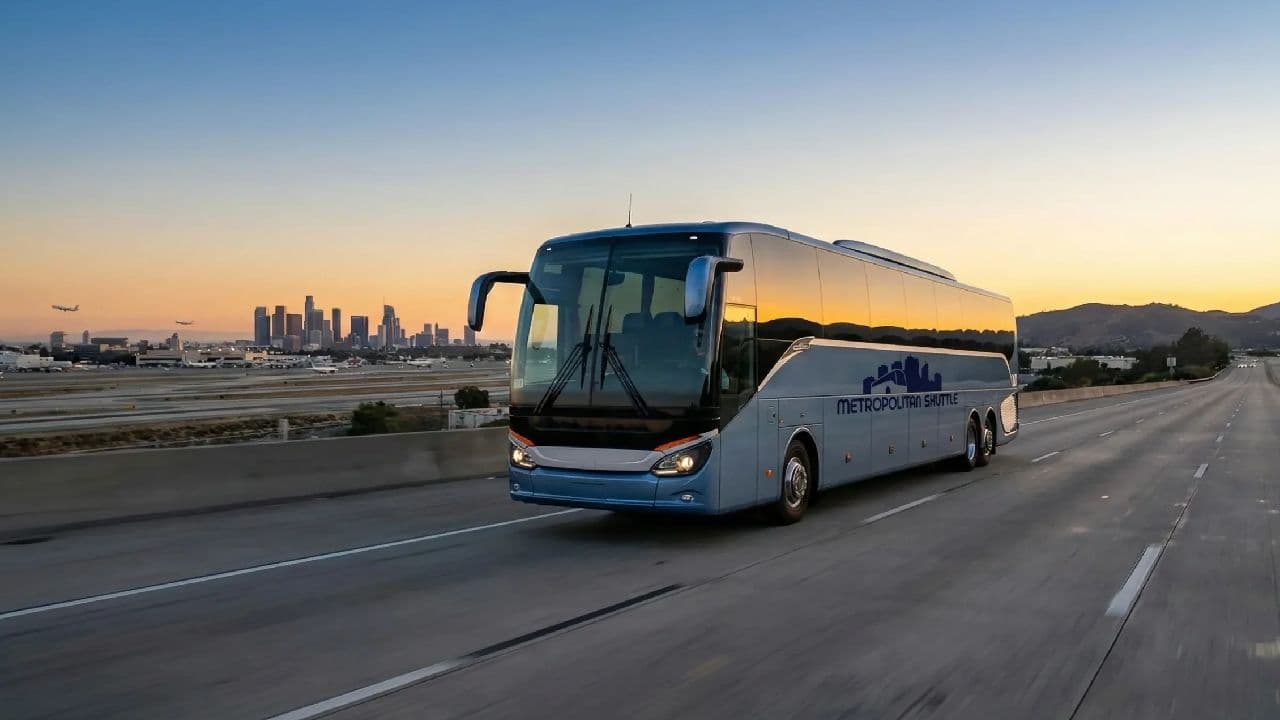
To choose the right charter bus for your group size, match your passenger count to the vehicle’s rated capacity. A 14-passenger sprinter van fits small teams, while a 56-passenger motorcoach fits full school grades or sports rosters.
Overbooking a small van forces some passengers into a second vehicle. That split cancels out the cost and safety benefits of group travel. Underbooking a large motorcoach wastes budget on empty seats your group does not need.
4 Passenger Capacities to Match Your Group
- 14-passenger Mercedes-Benz Sprinter Van for small teams
- 33-passenger executive coach for mid-size groups
- 40-passenger black luxury coach for corporate events
- 56-passenger motorcoach for schools and large conventions
You can explore our fleet to compare seating layouts and onboard features before booking. Each vehicle size carries its own amenity package, so confirm what your group needs before you request a quote.
How to Book a Charter Bus for Your Group Trip
To book a charter bus for your group trip, request a quote 1 to 3 months before your travel date. Provide your passenger count, pickup location, destination, and trip dates for an accurate price.
Most charter bus companies confirm availability within 24 hours and require a deposit to hold the reservation. A 30% deposit is common, with the remaining balance due 5 to 7 days before departure.
Trip distance, trip length, and travel season all affect your final rate. Multi-day charters, holiday weekends, and peak summer dates typically cost more than a single weekday trip under 100 miles.
How Does Charter Bus Travel Work for DMV and East Coast Group Trips?
Charter bus travel works best for DMV and East Coast groups traveling between major hubs without renting multiple cars. Groups departing Washington D.C., Northern Virginia, or Maryland can reach New York, Boston, or Atlanta without airport transfers.
Regional charter bus service eliminates the need for connecting flights or rental car counters at your destination. Your motorcoach picks up your group at one location and drops off directly at the event, hotel, or venue.
Traffic on the I-95 corridor and the Capital Beltway also affects self-driving groups more than professional drivers. Licensed drivers plan routes around congestion, construction, and weather delays before your trip departs.
East Coast destinations like Philadelphia, Charlotte, and Newark also sit within a single day’s drive of the DMV area. A charter bus makes these regional trips practical for school groups and sports teams that would otherwise need overnight flights.
What Happens If Weather or Traffic Delays Your Charter Bus Trip?
Charter bus companies monitor weather and traffic conditions and adjust routes before delays affect your group. Dispatch teams track each vehicle in real time and communicate updates directly to trip organizers.
Self-driving groups lack this coordination when multiple cars separate during a storm or detour. A charter bus keeps your entire group together, even when conditions change mid-trip.
Backup vehicles also reduce the risk of a canceled trip. Reputable charter bus companies maintain spare motorcoaches for mechanical issues, which protects your schedule from single-vehicle breakdowns.
Self-driving groups have no equivalent backup plan when a personal car breaks down mid-trip. A single mechanical failure can strand passengers and delay the group, since remaining cars rarely have room for extra riders.
Which Groups Benefit Most From Charter Bus Travel Over Driving?
Groups traveling more than 50 miles (80 km) together benefit most from charter bus travel over driving yourself. Named examples include school classes, corporate teams, wedding parties, sports rosters, and church congregations.
- School classes traveling to state competitions
- Corporate teams attending multi-day conferences
- Wedding parties moving between 2 or more venues
- Sports rosters heading to away games
- Church congregations attending regional retreats
AZA Transportation’s group transportation service supports each of these trip types with dedicated dispatch coordination. Every group receives a single point of contact from quote request through drop-off.
What Should You Ask a Charter Bus Company Before Booking?
Ask a charter bus company about driver certification, insurance coverage, and vehicle age before you sign a contract. These questions reveal whether a company meets federal safety standards.
- Does the driver hold a CDL with passenger endorsement?
- What commercial insurance coverage applies during the trip?
- How old is the vehicle assigned to your group?
- What is the cancellation and deposit policy?
- Are backup vehicles available in case of mechanical issues?
A company that answers these 5 questions clearly typically operates with proper DOT compliance. Vague or delayed answers often signal a company cutting corners on safety or licensing.
A written contract should also confirm your pickup time, drop-off location, and total price before you pay a deposit. Clear paperwork protects your group from surprise fees on the day of travel.
Charter Bus vs Driving Yourself at a Glance
The table below compares charter bus travel against driving yourself across 4 key factors.
| Factor | Charter Bus | Driving Yourself | Result |
|---|---|---|---|
| Cost per passenger (50-mile / 80 km trip) | $30 to $50 | $60 to $90 | Charter bus costs less |
| Driver responsibility | Licensed CDL driver | Volunteer or self | Charter bus reduces fatigue risk |
| Trip coordination | 1 quote request | Multiple vehicle logistics | Charter bus saves planning time |
| CO2 emissions per passenger mile | 0.17 lbs (0.08 kg) | 0.96 lbs (0.44 kg) | Charter bus lowers emissions |
Frequently Asked Questions About the Benefits of Charter Bus Travel
Is charter bus travel cheaper than driving yourself?
Yes. Charter bus travel costs less per passenger than fuel, tolls, and parking for several cars combined.
Do charter buses include restrooms and Wi-Fi?
Yes. Most full-size motorcoaches include onboard restrooms, Wi-Fi, and power outlets for every passenger.
How many passengers fit on a charter bus?
A full-size motorcoach seats up to 56 passengers, while smaller coaches hold 33 to 40 passengers.
Is charter bus travel safer than driving yourself?
Yes. Professional drivers follow FMCSA rest rules and pass regular vehicle inspections, lowering accident risk.
How far in advance should groups book a charter bus?
Groups should book a charter bus 1 to 3 months before departure, especially during peak travel seasons.
Book Your Charter Bus and Skip the Driving
Charter bus travel delivers lower costs, professional safety standards, and onboard comfort that driving yourself cannot match. Your group arrives together, relaxed, and ready for the trip ahead in 2026.
Request a free quote from AZA Transportation today and book a motorcoach built for your group’s next trip.
About the author:
Tahir Mughal